

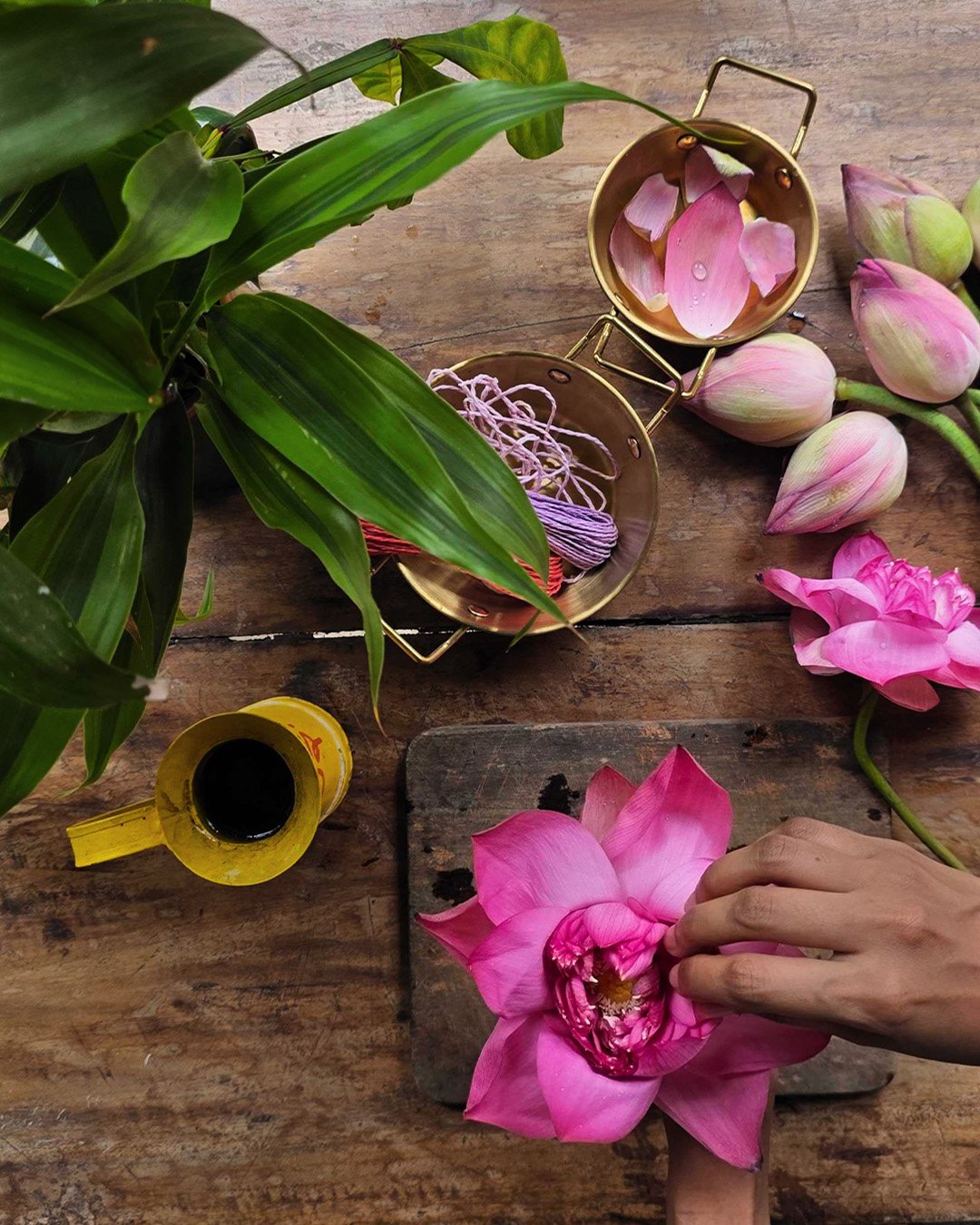
While much of the world rang in the New Year four months ago, a billion people across South and Southeast Asia celebrated it yesterday — and they have astronomy on their side.
April 14th marks the New Year across several South and Southeast Asian countries and cultures. While most of the world uses the Gregorian calendar, introduced by Pope Gregory XIII in 1582, much of tropical Asia relies on a lunisolar calendar, a system devised by Indian astronomers thousands of years ago to calculate the dates of key festivals, harvests, and auspicious dates.
The lunisolar year is approximately 365 days long and was calculated by observing the position of the Sun relative to major constellations—the same constellations we see in horoscopes today. The New Year happens when the Sun moves from Pisces (called Meena in Sanskrit) to Aries (called Mesha). Ancient astronomers would calculate when the Sun had returned to the same position in the sky, completing a full orbit.
This system is actually more accurate than the Gregorian calendar, as the Earth takes approximately 365.256 days to fully orbit the Sun. The lunisolar system takes this into account, adjusting months accordingly and ensuring that seasons remain tied to major festivals and the phases of the Sun and Moon. Because of this precision, it remains important for religious and agricultural purposes in South and Southeast Asia today.
Why April? The Sun’s entry into Aries coincides roughly with the spring equinox, when day and night are of equal length, and also occurs when the Sun is directly overhead in the tropics—when shadows are shortest and the sun’s heat is particularly intense. In already hot regions, this is typically the hottest period of the year, so the festival is quite literally a celebration of the power of the Sun. Across cultures, the Sun is central to the festival’s imagery.
This is not a coincidence of similar cultures independently arriving at the same answer — it is, in large part, the same calendar, exported. The lunisolar system used across Thailand, Cambodia, Myanmar, Sri Lanka, and Kerala is rooted in Sanskrit astronomical texts, particularly the Surya Siddhanta (roughly 4th–5th century CE), which spread outward from the Indian subcontinent along with Hinduism and Buddhism, carried by traders, priests, scholars, and courts. Hindu kingdoms across Southeast Asia adopted Sanskrit as a court language and Indian astronomical systems as the basis for religious timing. When Theravada Buddhism later spread through the same courts, it absorbed rather than replaced the calendar — layering Buddhist festivals onto an existing lunisolar framework. The result is a shared astronomical heritage that crosses national and religious boundaries, and is one of the most consequential cultural transmissions in world history.
As a celebration of the Sun, harvests, and renewal across a swath of the tropical world, we could argue the lunisolar New Year is the tropical festival — the Diwali, the Eid, the Christmas of the tropics. Across the tropical world, the lunisolar New Year is unmatched in terms of its scale, cultural impact, and how directly it celebrates the tropical world and its seasons. The lunisolar New Year explicitly celebrates the Sun, the rain, produce, harvests, and seasonality—emphasizing balance and renewal.
While the cultures that observe the April New Year differ widely, all participate in rituals related to water, the Sun, and preparation for a new harvest. From Kerala to Myanmar, the dishes and preparation styles may vary, but the fundamental ingredients—rice, coconut milk, palm sugar, mung beans, and fresh fruits like mango, bananas, and jackfruit—are common to festive tables in all the celebrating cultures.
In Sri Lanka, the Aluth Avurudhak Wewa is associated with the Koel, a red-eyed bird whose distinctive mating call in March/April heralds the New Year. The festival also celebrates the blossoming of yellow ehala flowers (Cassia fistula) and brilliant red erubudu (Erythrina indica), with their colors symbolizing the flames of the Sun. Families clean their homes, take ritual baths, and anoint themselves with water and coconut oil. They eat festive sweets made from coconut, palm sugar, mung bean flour, and rice. Traditionally, the festival also marked the beginning of preparations for the next planting season.
In Thailand, Songkran similarly celebrates the Sun’s power, seasonal renewal, and the coming agricultural season. Rituals emphasize purity with the washing of statues, houses, and temples—though today, ritual bathing has transformed in much of the country into a massive and exuberant water battle. The symbolism remains the same: water represents purity and the hope for cooling rains to balance the Sun’s power.
In Cambodia, Chaul Chnam Thmey involves ceremonial bathing and the washing of homes and temples. Families contribute sand and soil from their homes and fields to erect temporary sand stupas that will wash away with the coming rains. The sand also represents purity, so Cambodians celebrate soil, water, and the Sun—all elements of a successful harvest. Traditional New Year foods like ansom and kralan feature combinations of rice, coconut milk, and palm sugar.
In Kerala, India, Vishu is observed with families creating a Vishukkani, an auspicious arrangement of fruits, vegetables, and flowers. Featuring rice, coconut, mango, jackfruit, and marigolds, the offerings are meant to be the first thing seen in the New Year—bringing luck and abundance. New Year dishes in Kerala, like Vishu Kanji and Mampazhappulissery, again feature combinations of rice, coconut milk, and seasonal fruits.
Wherever you are in the region, you will see the same elements. The celebration takes different forms, but the emphasis on the Sun, renewal, and abundance remains the same, making the lunisolar New Year truly the most widespread celebration of tropical food culture and flavor in the world.
The lunisolar New Year is not the only tropical sun festival. In the Andes, Inti Raymi honors the Sun every June 24 — but falling on the Southern Hemisphere’s winter solstice, it marks a very different moment in the Sun’s journey. In West Africa, yam festivals mark the first harvest with offerings, feasting, and rituals that echo the same spiritual logic — but vary so widely by community and timing that nothing binds them into a single shared moment. Both traditions are profound, but both illustrate, by contrast, what makes the lunisolar New Year so remarkable: astronomical precision, cross-cultural reach, and a single thread of Indian Ocean transmission connecting such different nations in one celebration.
As an all-encompassing festival of greenery, abundance, and tropical intensity, the lunisolar New Year is hard to surpass.
Sawasdee Pi Mai (Thailand), Suba Aluth Avurudhak Wewa (Sri Lanka), Soursdey Chhnam Thmey (Cambodia), Vishu Ashamsakal (Kerala), Nhit Thit Kaung Myat Par Say (Myanmar) – Happy New Year to all!