

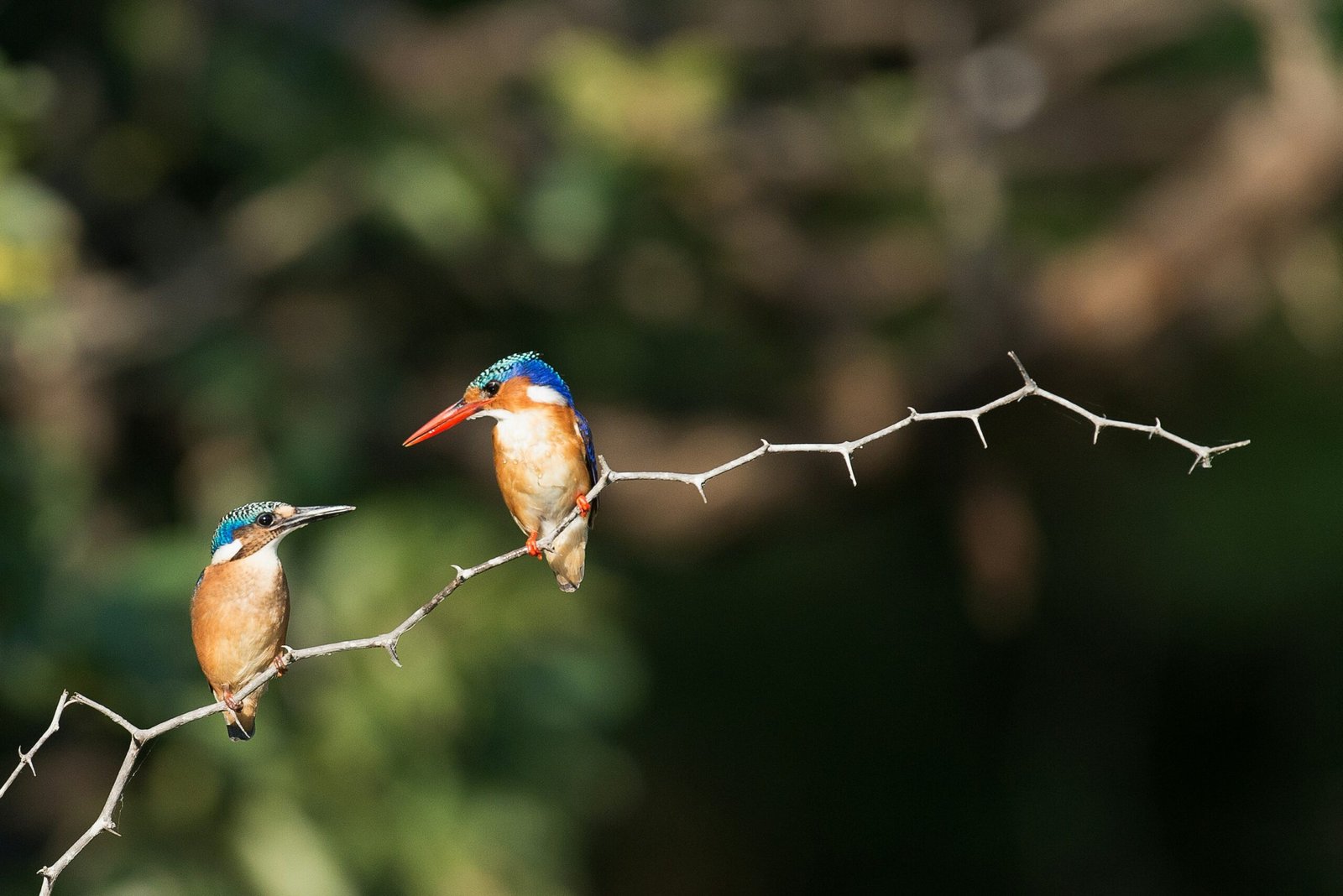
Every tropical forest has its own cast of birds.
They appear again and again across continents, each with local variations. Once you know what to look for, you’ll begin spotting familiar patterns whether you’re walking through a rainforest in Borneo, a wetland in the Pantanal or a rice field in Sri Lanka.
Kingfishers
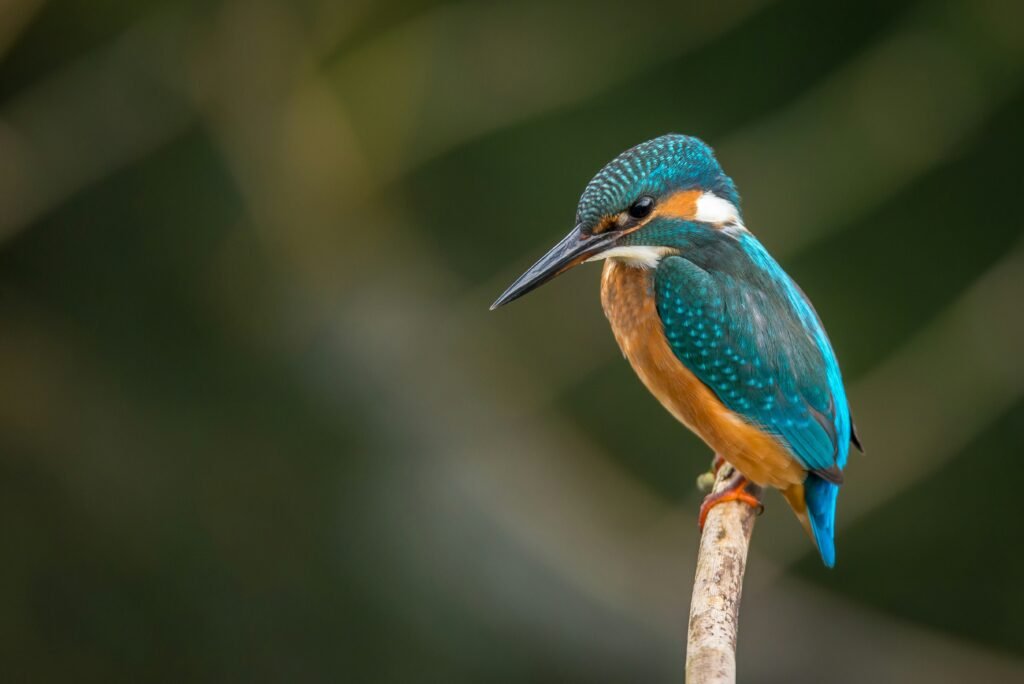
There are more than 100 species of kingfisher around the world. Forget the colours—they change dramatically from continent to continent. Instead, learn the shape: a compact body, an oversized head and a spear-like bill.
Asia: White-throated, Stork-billed and Collared Kingfishers are among the most widespread, found from urban parks to mangrove forests. Despite the name, the White-throated Kingfisher often hunts lizards and insects rather than fish.
Africa: The tiny Malachite Kingfisher is one of the continent’s brightest birds, while the Giant Kingfisher patrols larger rivers and lakes.
The Americas: Green, Ringed and Amazon Kingfishers trade Asia’s electric blues for rich greens and slate-grey plumage, often perched above broad tropical rivers.
Australasia: The Laughing Kookaburra is the world’s largest kingfisher. Its famous cackling call echoes through forests and suburbs alike, and it feeds mainly on insects, reptiles and small mammals.
The giveaway: Look for a bird sitting perfectly still on an exposed perch before suddenly diving.
Did you know? Many kingfishers rarely eat fish at all.
Hornbills
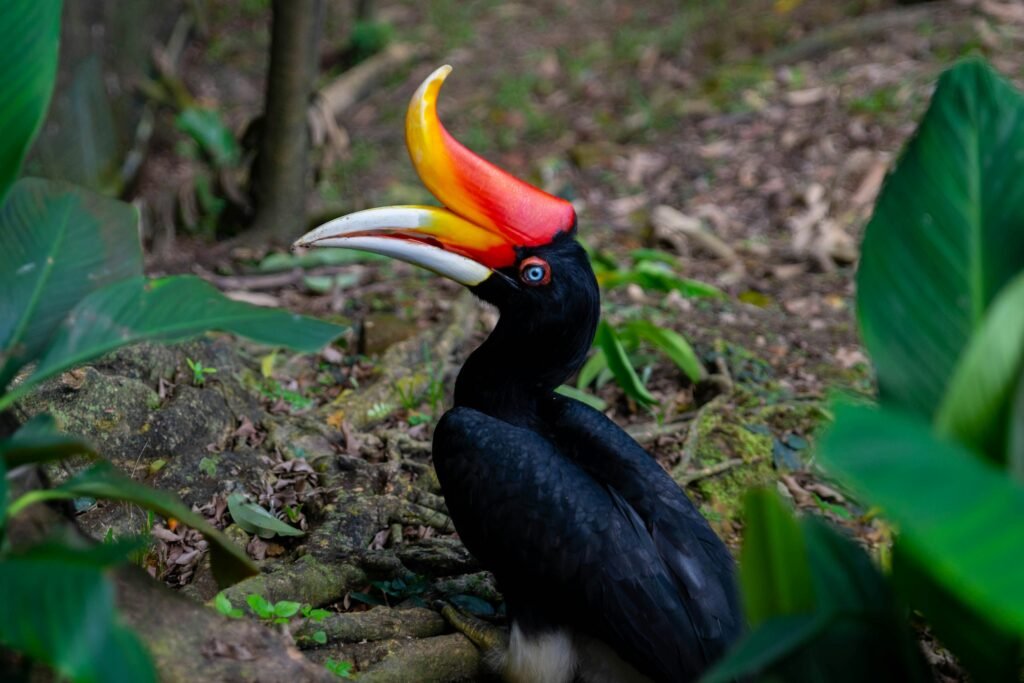
Hornbills are among the great fruit carriers of the tropical forest. With enormous bills and powerful flights, they swallow fruit whole and disperse seeds over remarkable distances.
Asia: Great, Rhinoceros and Helmeted Hornbills are icons of Asian rainforests, each crowned with spectacular casque-topped bills.
Africa: Yellow-billed, Red-billed and Ground Hornbills fill similar ecological roles, although several species spend much more time foraging on the ground.
The Americas: There are no hornbills. Instead, toucans occupy a remarkably similar niche, using oversized bills to reach fruit at the ends of branches beyond the reach of heavier birds.
Australasia: Papuan Hornbills and Blyth’s Hornbills continue the family into New Guinea and neighbouring islands, where they remain vital seed dispersers.
The giveaway: Before you see one, you’ll often hear it. Their wingbeats produce a deep, rhythmic whooshing sound that carries through the forest.
Did you know? Female hornbills seal themselves inside tree cavities while nesting, relying on the male to feed them through a narrow slit until the chicks are ready to hatch.
Bee-eaters
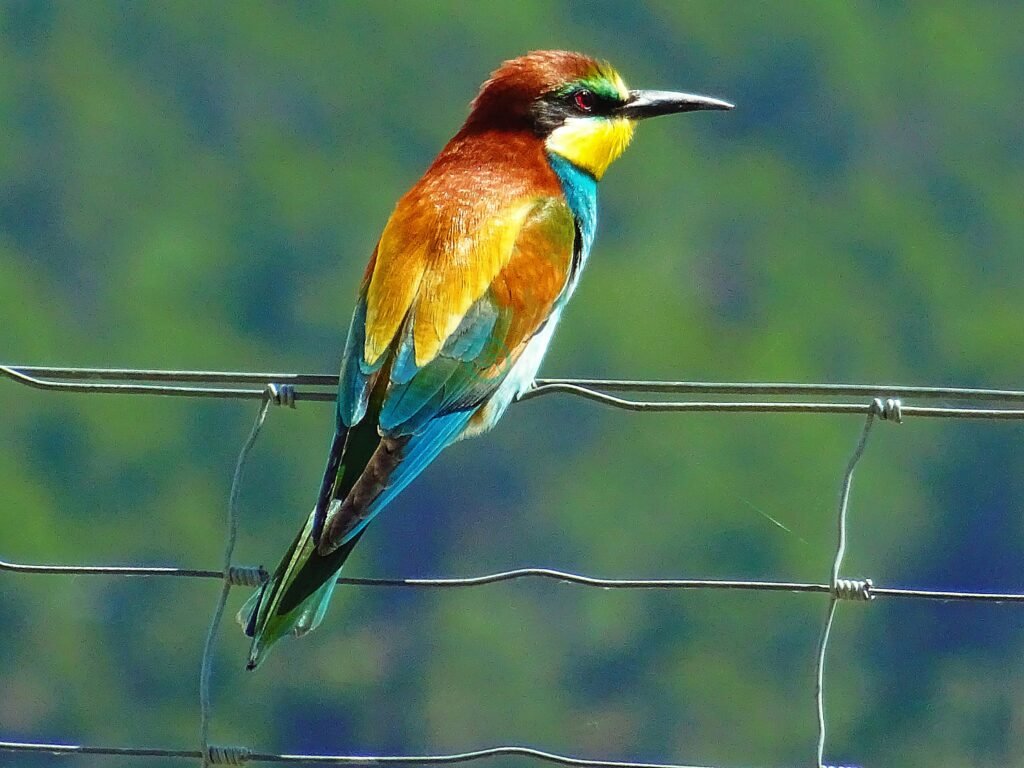
If kingfishers are patient hunters, bee-eaters are aerial acrobats. Elegant, colourful and almost constantly in motion, they spend their days catching insects on the wing.
Asia: Green, Blue-tailed and Chestnut-headed Bee-eaters are common sights along forest edges, rice fields and riverbanks.
Africa: Africa is the global centre of bee-eater diversity, home to more than half the world’s species, including the dazzling Little Bee-eater and Carmine Bee-eater.
The Americas: There are no bee-eaters. Their closest ecological counterparts are jacamars—metallic birds with long bills that also hunt flying insects from exposed perches.
Australasia: The Rainbow Bee-eater is Australasia’s only bee-eater, migrating thousands of kilometres each year between Australia and New Guinea.
The giveaway: Watch for a bird repeatedly launching from the same perch to snatch insects before returning to exactly the same branch.
Did you know? Bee-eaters beat bees and wasps against branches to remove the sting before swallowing them.
Sunbirds
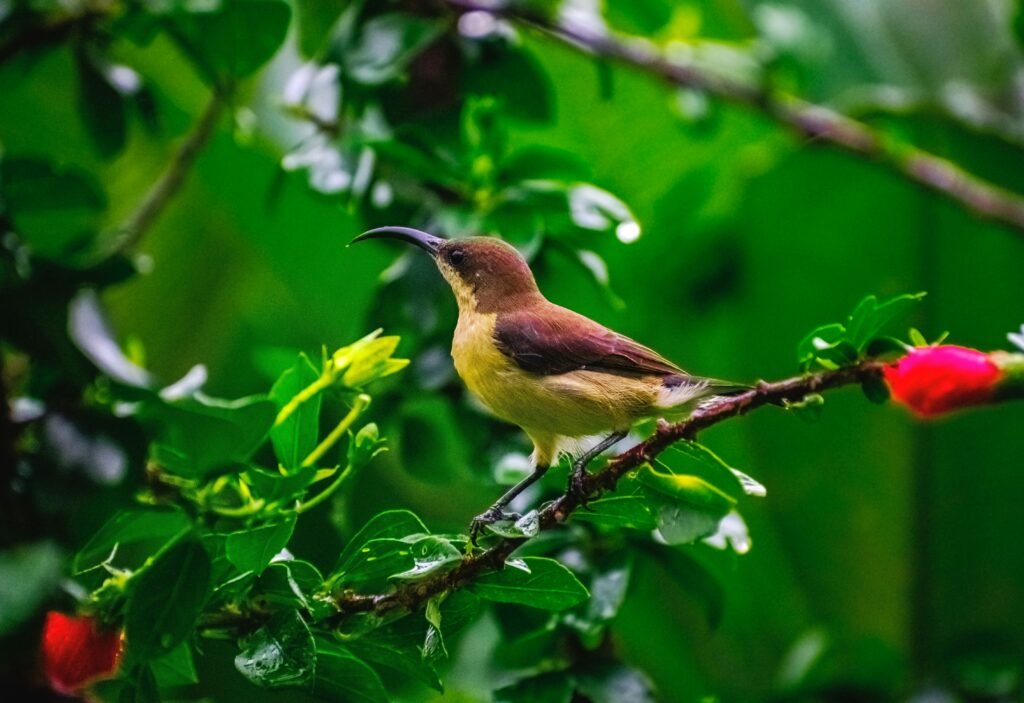
The Old World has sunbirds. The New World has hummingbirds. They aren’t closely related, but evolution gave both groups long bills and a love of nectar.
Asia: Purple, Crimson and Olive-backed Sunbirds flash iridescent colours through gardens, forests and flowering trees.
Africa: With more than 80 species, Africa is the centre of sunbird diversity, from tiny Olive Sunbirds to the brilliant Scarlet-chested Sunbird.
The Americas: Hummingbirds take over the role completely. More than 350 species hover effortlessly as they feed from flowers across the tropical Americas.
Australasia: Sunbirds disappear east of Wallace’s Line. Here, honeyeaters have evolved to fill much the same role, feeding on nectar and pollinating flowering trees across Australia and New Guinea.
The giveaway: Don’t chase the bird—watch the flowers. Nectar feeders always return.
Did you know? Sunbirds usually perch while feeding. Hummingbirds famously hover. Two very different bird families arrived at almost the same solution.
Egrets

Egrets are so familiar that they’re easy to overlook. Yet they’re among the few birds you’ll encounter almost everywhere in the tropical world.
Asia: Little, Intermediate and Great Egrets stalk rice paddies, mangroves and wetlands, while Cattle Egrets are regular companions to grazing buffalo.
Africa: Great White, Black Herons and Cattle Egrets thrive across wetlands, floodplains and savannas, often following large mammals in search of disturbed insects.
The Americas: Snowy, Great and Cattle Egrets occupy marshes, estuaries and tropical grasslands from Florida to Patagonia.
Australasia: Eastern Great Egrets, White-faced Herons and Cattle Egrets are common across wetlands, floodplains and coastal lagoons.
The giveaway: Brilliant white plumage, an unhurried walk and remarkable patience.
Did you know? Cattle Egrets happily follow buffalo, elephants, cattle—and even tractors—because they flush insects into the open.