











Dreaming of a Tropical Christmas

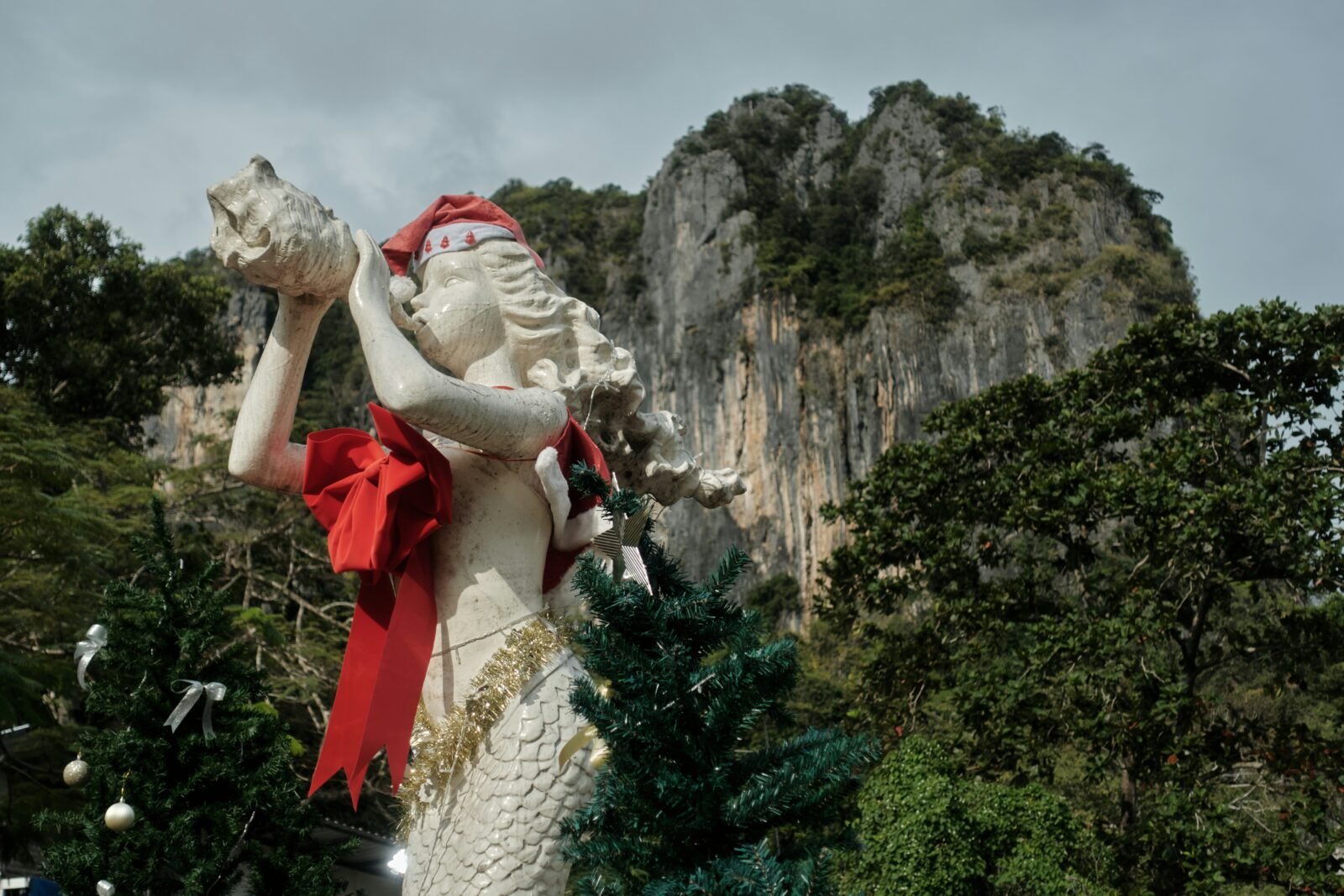
Much of the world has been sold a very specific version of Christmas: snowy lanes, cozy fireplaces, and a guy in a heavy red suit flying out of the North Pole. But for the millions of us living in the tropical region, December isn’t about freezing temperatures. It’s about peak humidity, blazing sunshine, and sweating through your best outfit. The winter aesthetic might look good on a card, but the reality here is a whole lot brighter and louder.
In the tropics, we live Christmas outside. In the streets, on the beaches, in the markets. From the historic Fanti carnival in Nigeria to the star-lit lanterns of the Philippines, you don’t need to give us an excuse to celebrate. But the true heartbeat of the holiday is the food. The feasts here are colorful, the flavors intense, and the ingredients dug from or cooked in the earth. At Jungle Kitchen, we want to bring that same spirit to your kitchen, wherever you are in the world. From Bogota, Colombia to Port Moresby, Papua New Guinea, here is how the jungle does Christmas.
Bogota, Colombia
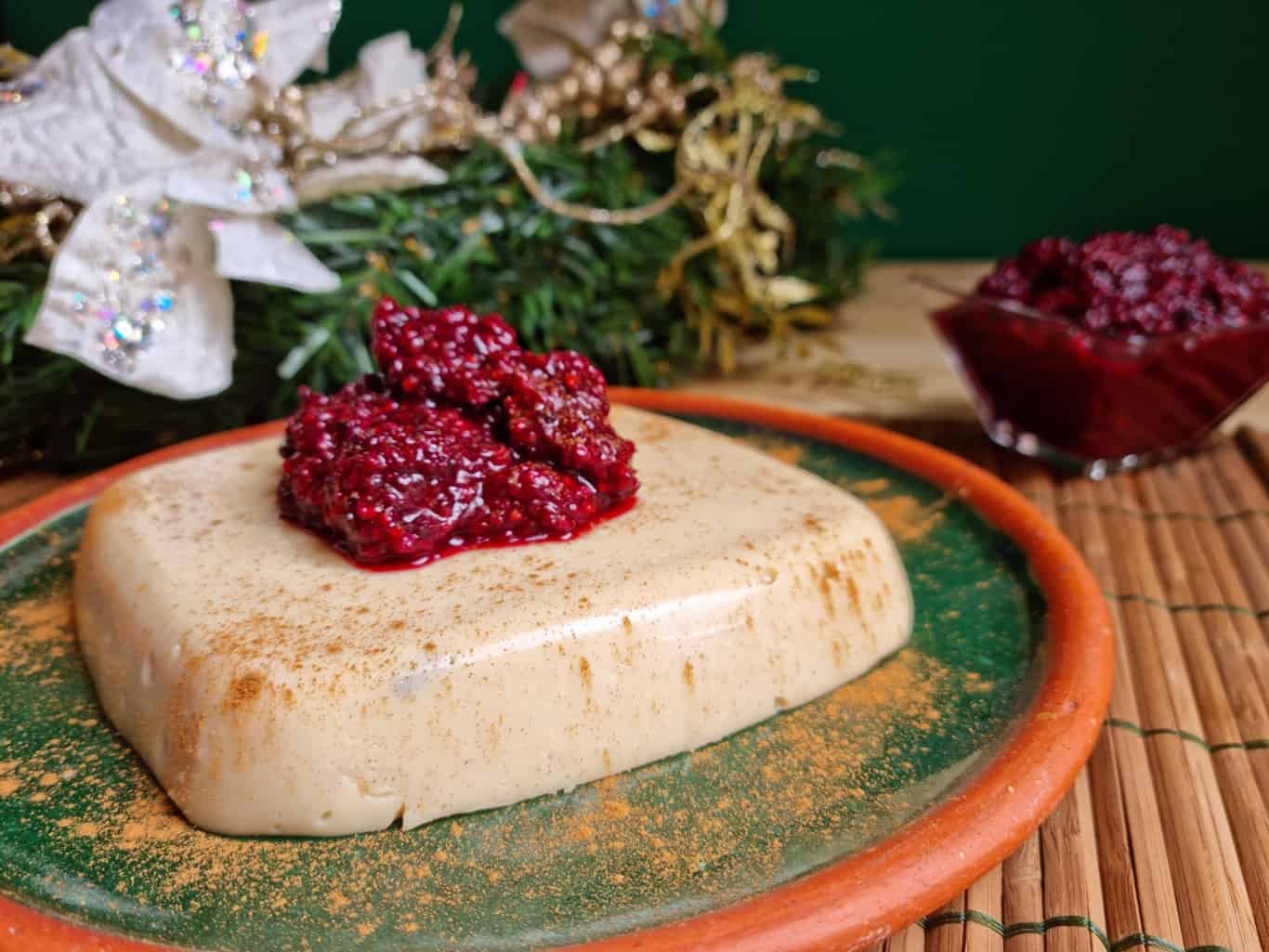
Image from Vecina Vegetariana
In Bogota, Christmas is not a single day; it is a full-blown season that starts on December 7th with Día de las Velitas (Day of the Little Candles). On this night, the city—from high-rise balconies to curbsides—is covered in millions of candles and paper lanterns, marking the official start of the holidays with a collective act of light and hope. But the real marathon begins on December 16th with the Novena de Aguinaldos, a nine-day tradition where families and neighbors gather nightly to pray, sing carols (villancicos), and, most importantly, eat. It is a rolling house party that blends spiritual devotion with intense socializing, ensuring that by the time Christmas Eve arrives, the community is already tightly knit.
The fuel for these nightly gatherings is almost exclusively “snack” food, but heavy enough to replace a meal. The stars of the Novena table are natilla and buñuelos. Natilla is a firm, caramel-colored custard sweetened with panela (unrefined cane sugar) and often dusted with cinnamon—a sweet, comforting anchor for the evening. It is always paired with buñuelos, perfectly round, savory cheese fritters that are fried until golden and crisp. The combination of the sweet, smooth custard and the salty, hot fritter is the non-negotiable flavor of a Colombian Christmas, proving that you don’t need a massive roast to make a feast.
Kingston, Jamaica
Image from Jamaica Experiences
In Jamaica, the holiday energy peaks before the sun even rises on Christmas Day. It centeres on the Grand Market, a chaotic street festival that takes over towns across the island on Christmas Eve. It’s the ultimate block party: roads are closed to traffic, sound systems blast music, and the streets come to life with people shopping for toys and showing off their “Christmas best” outfits. The smell of roasted corn, sugarcane, and jerk fill the air as the community stays out all night to welcome the holiday.
When the focus shifts to the table, the flavors turn dark, spicy, and distinct. The season’s signature is sorrel, a crimson drink brewed from dried hibiscus flowers (sorrel), fresh ginger, and pimento, usually spiked with white rum. On the dinner plate, the everyday “rice and peas” gets a holiday upgrade. Instead of red kidney beans, the rice is cooked with gungo peas (green pigeon peas), which are prized for their nuttier, earthier flavor. And for dessert, there is the legendary Jamaican fruit cake, a dense, dark cake packed with dried fruits that have often been soaking in wine or rum for months.
Lagos, Nigeria

Image shot by Kelechi Anabaraonye, Africa’s A Country Blog
In Lagos, the scorching tropical heat is no match for a Christmas celebration centered on open doors and hospitality. The preparation is a tactical operation: matriarchs hit the markets days in advance, sourcing ingredients for a menu where fried rice and spicy chicken with moi moi (steamed bean pudding) on the side reign supreme. By Christmas morning, kitchens are a blur of activity as the chicken hits the hot oil and the moi moi is set to steam. By noon, after the Christmas service in church, guests start pouring in. The living room serves as the initial stage, but the crowd inevitably swells, spilling into the compound in a vibrant mix of high-volume music, animated chatter, and continuous rounds of eating. For many, this is just the first stop in a multi-day marathon of neighborhood house-hopping and feasting.
In Lagos, the celebration reaches its fever pitch when the private parties merge with the legendary Lagos Fanti Carnival. As the afternoon sun peaks, the city’s Brazilian Quarter becomes an electrified stage for the Fanti troupes. Iconic groups like Campos Caretta, Lafiaji, and Olowogbowo converge on Broad Street, their elaborate, shimmering costumes catching the light in a kaleidoscope of color. The energy is visceral; the rhythmic pulse of drums and chants transforms the city into a massive, synchronized procession. It is here, amidst the dazzling dance steps and the collective roar of the troupes, that the spirit of a Lagos Christmas is found.
Kinshasa, Democratic Republic of the Congo
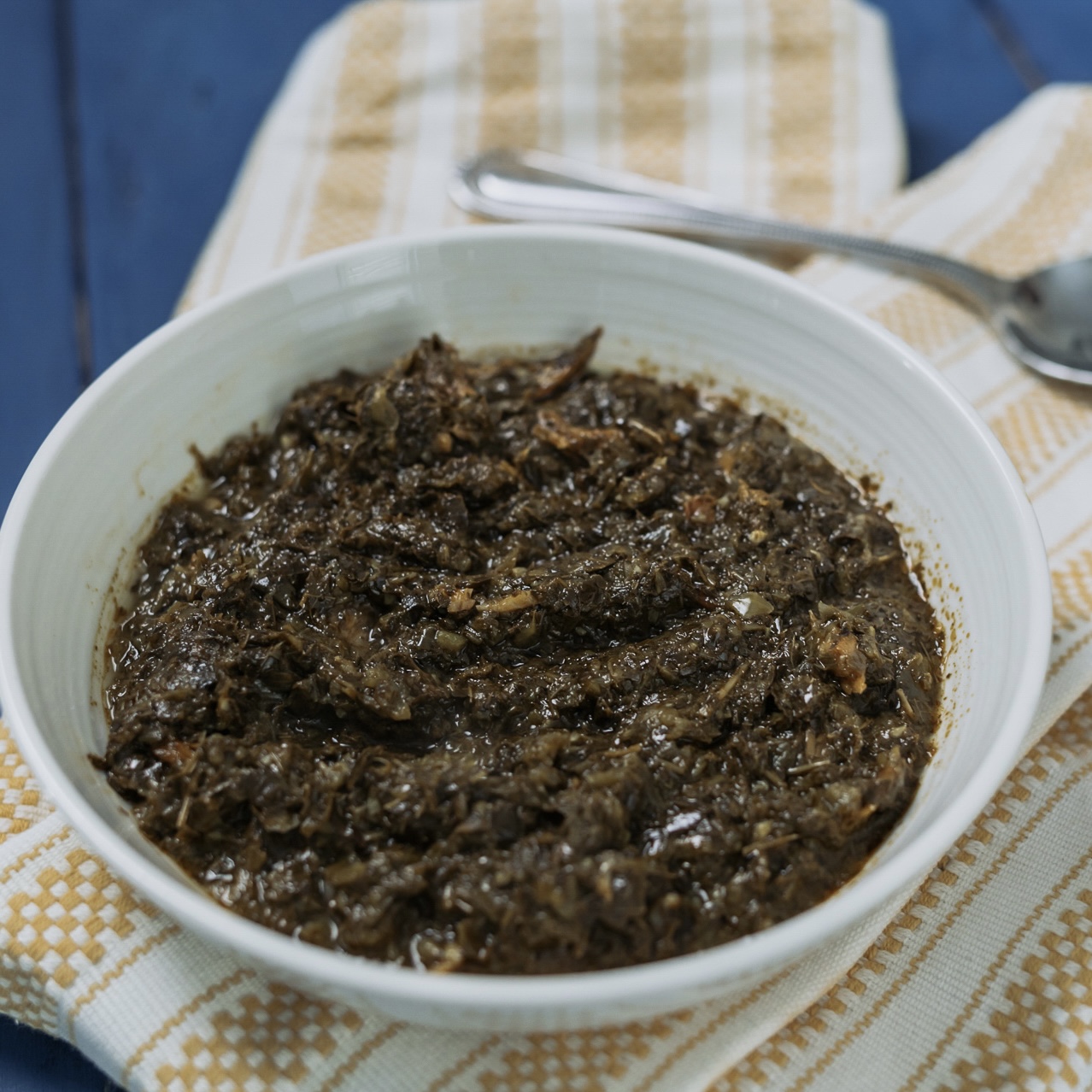
Image by The Blue Fufu
In Kinshasa, the holiday isn’t defined by a rush to the mall, but by an all-night marathon of song. Christmas Eve is an electric spiritual festival where churches host up to six different choirs and stage epic nativity plays that stretch from Creation all the way to King Herod, often lasting until the sun comes up. It is a celebration of presence over presents; with few gifts exchanged, the focus remains tight on community, faith, and the energy of a city that stays awake to sing the holiday in.
By Christmas morning, not even a mouse stirs as the city recovers and the real feast begins. The table is dominated by the rich, earthy flavors of the Congo: Moambe Chicken (simmered in a savory peanut and palm nut sauce) and liboke (river fish spiced and steamed inside banana leaves). But the true anchors of the meal are the starches and greens—sticky, comforting fufu for scooping up sauces, and pondu, a beloved stew made from cassava leaves. It’s a day for eating outdoors in “communal circles,” sharing the best of the local harvest with neighbors in a gesture of pure togetherness.
Nairobi, Kenya

Image by Chef’s Pencil
In Kenya, the holiday season begins with a mass exodus that leaves the capital of Nairobi feeling strangely quiet. This is the “December Rush,” where the city empties out as families pack into buses and cars to travel upcountry to their ancestral villages. It is a powerful annual pilgrimage back to the land and the extended family, shifting the celebration from urban centers to the rural heartlands. The result is a holiday defined by the reunion of generations in the open air, where the festivities are loud, communal, and deeply connected to the soil.
When the feasting begins, the air fills with the smoke of nyama choma (roasted goat), the undisputed GOAT of the Kenyan Christmas table. But the real magic lies in the sides that ground this meal. No plate is complete without mukimo, a vibrant, earthy mash of potatoes, corn, and pumpkin leaves that literally serves up the garden in a single scoop. Flanking it are stacks of chapati (soft, layered flatbreads) that are labour-intensive to make and historically revered as a special holiday treat. It’s a feast where fresh, simple ingredients are elevated by the joy of sharing them.
Colombo, Sri Lanka

Image by yalu yalu
In Colombo, the holiday doesn’t wait for dinner; it starts the second the sun comes up. While the city streets are still recovering from the midnight firecrackers that announce the 25th, families are already sitting down to the most distinctive breakfast in the tropics: breudher. A legacy of the Dutch Burgher community, breudher is a buttery, yeast-risen cake that sits halfway between bread and pastry. In a move that defies standard culinary logic but tastes incredible, a slice of breudher is traditionally topped with a thick layer of butter, a slice of salty Edam cheese, and a small, sweet banana (often the kolikuttu variety). It’s a lesson in sweet, salty, and creamy textures that you won’t find anywhere else.
Beyond the breakfast table, the air in Colombo is thick with the scent of rich cake, the island’s dense, spice-heavy answer to fruitcake. Unlike its Western cousins, this cake is packed with semolina, preserves (chow-chow), and local spices like Ceylon cinnamon and nutmeg. In the true spirit of the island, these treats aren’t just for the household; plates of cake and breudher are carried next door to neighbors of all faiths, turning the holiday into a shared community event rather than a closed-door celebration.
Manila, Philippines
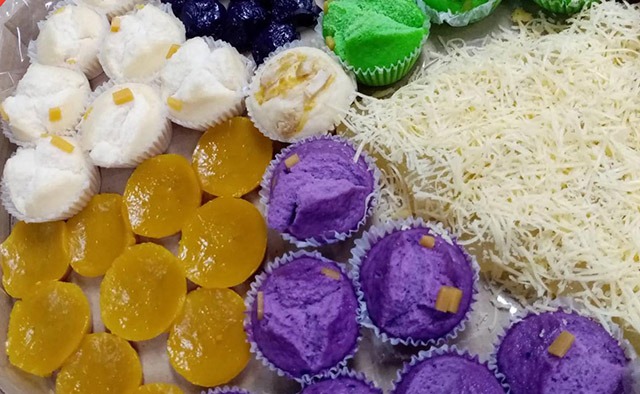
Image by YUMMY.ph
In the Philippines, Christmas isn’t just a day; it’s a four-month marathon. The season officially kicks off in September (the start of the “Ber” months), slowly building until the city is awash in the glow of the parol (iconic star-shaped lantern). Originally crafted from simple bamboo and paper to light the way for farmers heading to pre-dawn masses (simbang gabi), the parol has evolved into a dazzling electric spectacle that hangs in windows, streets, and malls everywhere. It’s a festival of light that mirrors the warmth of the culture, culminating in a celebration where families reunite and doors are thrown open to neighbors.
The climax is noche buena, the grand midnight feast on Christmas Eve. While ham and cheese often make an appearance, the real soul of the table lies in the kakanin (rice cakes). The streets outside churches fill with the smell of bibingka (rice flour cakes cooked in clay pots lined with banana leaves) and puto bumbong (distinctive purple sticky rice steamed in bamboo tubes). These dishes are sweet, warm, and heavy with coconut. Perfect comfort food that anchors a night of endless eating and storytelling.
Port Moresby, Papua New Guinea
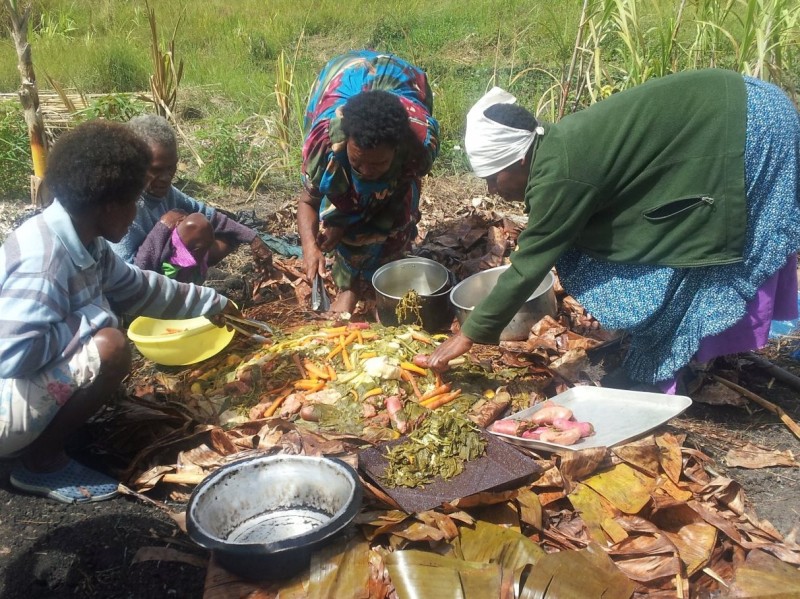
Image by Brad’s PNG Blog
The Christmas season officially ignites at Ela Beach, where the coastline glows with an elaborate display of Christmas lights wrapped around palm trees, creating a seaside fete that draws the whole city out after dark. It is a uniquely tropical spectacle: choirs singing carols against the sound of crashing waves, families gathering on the sand, and the humid night air filled with the energy of a community coming together before the big day arrives.
Come December 25th, the streets of Port Moresby fall silent as the celebration moves into the home for a massive, slow-cooked feast. The centerpiece of this tradition is the mumu, an ancient earth-oven method where food is wrapped in banana leaves and cooked over hot stones buried in the ground. While often used for meats, the mumu is a celebration of the garden’s abundance, turning local staples like kaukau (sweet potato), taro, yams, and leafy greens (like aibika) into tender, smoky delicacies infused with rich coconut cream. It’s an earthy, communal dining experience that prioritizes patience, flavor, and the sharing of a generous harvest.
As the sun dips below the horizon, a singular theme emerges from across the tropics: community is the true currency of the season. Whether found in the shared seafood platters of Port Moresby, the night-long church vigils in Kinshasa, or the festive house-hopping of Lagos, the holiday refuses to be a private or quiet affair. It’s a fragrant, inclusive feast where the kitchen never closes and the music serves as a heartbeat for the neighborhood. What we’ve come to realize is that the warmth of tropical Christmas is not a product of weather, but of a shared understanding that the holiday is best expressed through food, hospitality, and cultural pride.