

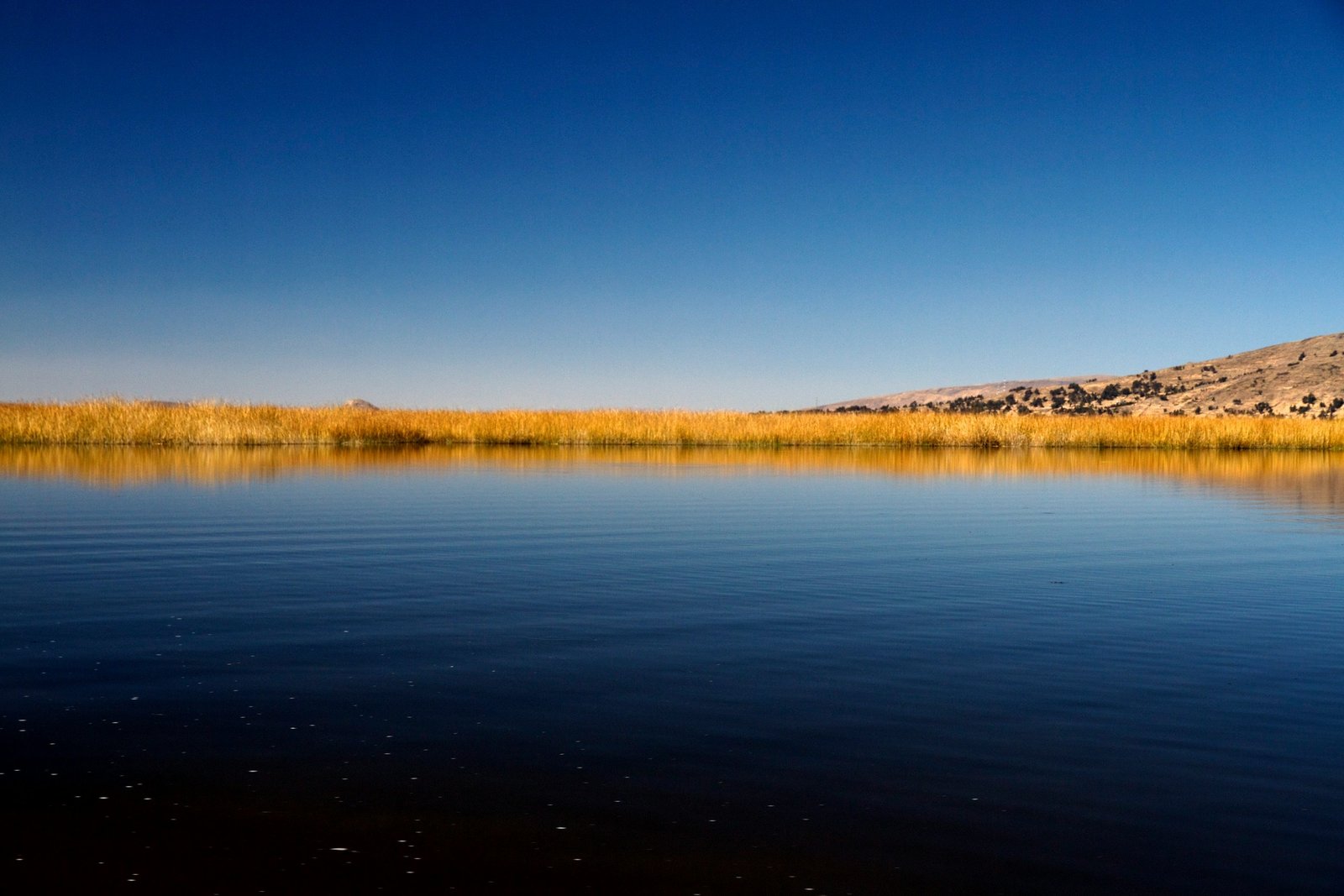
If you stand on the shores of Lake Titicaca, the first thing you notice is the air. At 3,800 metres above sea level, the atmosphere is razor-thin. You find yourself taking deep, greedy breaths just to pull enough oxygen into your lungs.
Straddling the border of Peru and Bolivia, this immense body of water sits in the middle of the Altiplano—a high Andean plateau defined by extremes. When the equatorial sun beats down through the thin atmosphere, it burns. But the moment that sun dips below the jagged peaks of the Andes, the temperature plummets, often plunging well below freezing. The soil is rocky, saline, and unapologetically harsh.
To the industrial agriculturalist, this landscape looks like a barren wasteland. A place to pass through, not a place to plant. It feels about as far from a lush tropical paradise as one can get.
Yet, if you walk into any high-end grocery store in London, Los Angeles, or Sydney, you will find entire aisles dedicated to the agricultural output of this exact terrain. You’ll find it stuffed into protein bars, puffed into cereal, and forming the base of overpriced, fast-casual salad bowls.
The West treats quinoa like a trendy lifestyle accessory. But the truth of this grain—and the other remarkable vegetables born in the Lake Titicaca basin—is far heavier. This isn’t a story about a trendy health fad. It’s a story about millennia of indigenous science, the danger of botanical gentrification, and what happens when the global market decides it wants your ancestral food more than you do.
5,000 Years of Extreme R&D
Before we get to the modern boom and bust, we have to respect the foundation.
You will often hear wellness influencers talk about how quinoa is an “ancient grain.” But that phrase is dangerously passive. It implies that the Quechua and Aymara people of the Altiplano simply tripped over a wild plant one day and threw it in a pot.
Here’s the thing: nothing about the edible, nutrient-dense quinoa (Chenopodium quinoa) we eat today is an accident. It is the result of over 5,000 years of intentional research and development.
The ancestral wild plant was a stubborn survivor, genetically coded to withstand crippling frosts, severe droughts, and intense ultraviolet radiation. But it protected itself with a thick, soapy, highly bitter coating of chemical compounds called saponins. If you eat the raw seeds without processing them, you will likely end up with severe stomach cramps.
The indigenous farmers of the Lake Titicaca basin didn’t just harvest this plant, they domesticated it. Over centuries, they selectively bred hundreds of distinct varieties, effectively colour-coding their agriculture. They cultivated white, red, and black strains, each precisely adapted to different micro-climates, soil acidities, and altitudes around the lake.
More importantly, they engineered the processing. To make the seeds edible, Aymara and Quechua women developed a labour-intensive system of threshing, winnowing in the high-altitude winds, and repeatedly washing the grains in the freezing waters of the lake to strip away the bitter saponins.
They transformed a toxic, bitter seed into a complete protein—one of the few plant sources on earth containing all nine essential amino acids. It was the exact dense, muscular fuel required to survive and build empires in the oxygen-starved Andes.
The Altiplano Pantry
While quinoa gets all the global press, it didn’t exist in a vacuum. The Lake Titicaca basin is a hotbed of indigenous botanical ingenuity. To understand the depth of this knowledge, you have to look beyond the grain and into the dirt.
The Altiplano is the ancestral birthplace of the potato. But while the West is content to boil or fry them, the indigenous communities of the Andes invented a food preservation technology that makes modern industrial canning look rudimentary.
They invented chuño.
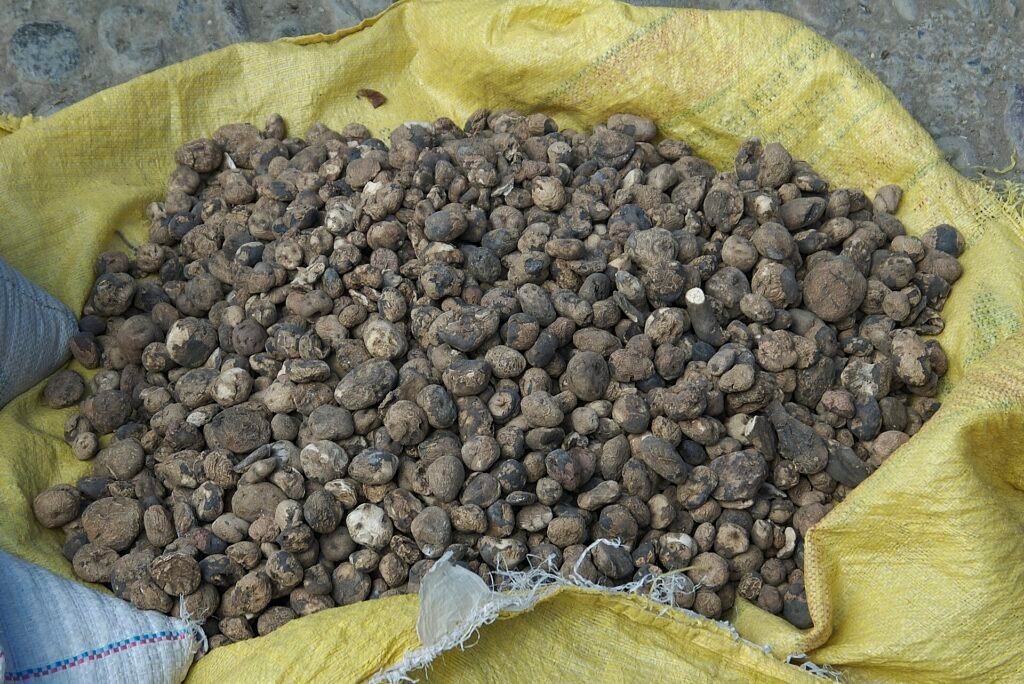
Making chuño is a lesson in utilising an extreme environment to your advantage. Following the harvest of bitter, frost-resistant potatoes, farmers spread the tubers out on the frozen ground. As the brutal nighttime temperatures freeze the potatoes, the cellular walls rupture. When the high-altitude sun rises the next day, the ice inside the potato melts.
The farmers then walk over the potatoes barefoot, systematically stomping the bitter juices and water out of the ruptured flesh. They repeat this freeze-thaw-stomp cycle for days until the potato is completely dehydrated.
The result is a light, chalky, freeze-dried nub that looks more like a pebble than a vegetable. But its appearance is deceiving. Chuño can be stored at room temperature for years—sometimes decades—without rotting. When rehydrated in a simmering stew of llama meat and herbs, it acts as a dense, earthy sponge. It was the ultimate insurance policy against the unpredictable famines of the Andes, pre-dating modern freeze-drying technology by over a thousand years.
Alongside chuño, the fields surrounding Lake Titicaca are dotted with other endemic wonders. Oca, a brightly coloured tuber that is left in the sun to naturally sweeten until it tastes almost like a roasted fruit. Tarwi, a blue-flowered legume that packs more protein than soybeans, carefully washed in the region’s streams to remove its own bitter alkaloids.
This was a complete and integrated food system. It was diverse, ecologically sound, and perfectly calibrated to the mountains.
Then, the wellness industry arrived.
The Miracle Marketing Machine
For centuries, the Spanish colonisers and their descendants largely ignored quinoa. They viewed it with disdain, labelling it “Indian food” and actively suppressing its cultivation in favour of European imports like wheat and barley.
But in the late 1990s and early 2000s, Western dietitians and food marketers began looking for the next big health trend. They sent their scouts to the Andes and found a gluten-free, complete-protein seed. The marketing machine immediately kicked into overdrive.
Quinoa was rebranded. It was stripped of its deep cultural context and repackaged in sleek pouches for the yoga-and-smoothie demographic of the West. The United Nations even declared 2013 the “International Year of Quinoa.”
Demand exploded. Between 2006 and 2013, the price of quinoa tripled. Suddenly, a crop that had been quietly sustaining the Andes for five millennia became one of the most sought-after agricultural commodities on the planet.
For a brief moment, it looked like a triumph. The farmers of the Altiplano, historically some of the most impoverished people in South America, were suddenly holding a winning lottery ticket. Villages around Lake Titicaca experienced an influx of cash. Corrugated tin roofs were replaced with clay tiles; bicycles were replaced with pickup trucks. The farmers who had kept the ancestral seeds alive were finally getting paid.
But global commodity markets are never benevolent. They don’t want a piece of the pie; they want the whole bakery.
The True Cost of a Commodity
The skyrocketing price of quinoa triggered a gold rush mentality. It wasn’t long before the delicate agricultural balance of the Altiplano began to unravel.
Driven by the insatiable demands of Western consumers, farmers abandoned their traditional, diversified crop rotations. The fields of tarwi, oca, and even the pastures reserved for llamas were aggressively plowed under to make way for endless, unbroken fields of quinoa.
This shift to monoculture was devastating. For thousands of years, herds of llamas and alpacas had naturally fertilized the quinoa fields with their nutrient-rich dung. By pushing the animals off the land to plant more grain, the farmers were forced to turn to chemical fertilizers to maintain yields.
And to keep up with the scale demanded by American and European exporters, traditional farming tools were swapped for heavy tractors. The problem? The topsoil of the Altiplano is fragile. The heavy machinery tore up the deep-rooted native grasses that held the earth together, accelerating wind erosion. The very soil that had sustained the Quechua and Aymara for thousands of years was literally blowing away to feed the wellness habits of the West.
But the cruelest irony of the quinoa boom wasn’t ecological. It was nutritional.
As the price of the grain surged, a tragic economic paradox took hold around Lake Titicaca. Quinoa became so valuable that the people who grew it could no longer afford to eat it.
Why would a mother in a Bolivian farming village feed a bowl of quinoa to her children when she could sell that single bowl to a buyer in New York and use the cash to buy five bags of cheap, imported, processed white pasta?
The math made ruthless economic sense, but it hollowed out the local diet. The nutrient-dense foundation of the Andean table was boxed up and shipped overseas, replaced by empty, imported carbohydrates. The wellness of the West was directly subsidised by the nutritional degradation of the tropics.
The Inevitable Crash
If there is one absolute rule in global agriculture, it is this: capital has no loyalty to geography.
The Western market loved quinoa, but it didn’t love paying a premium to Bolivian and Peruvian farmers. As the craze peaked, agronomists in North America, Europe, and Asia went to work. They took the seeds from the Andes and began breeding new, unpatented strains designed to grow at sea level, in warmer climates, and on massive industrial farms.
By 2015, the writing was on the wall. Countries across the globe were harvesting their own quinoa. The market was flooded.
The price crashed with violent speed. In the span of a few short years, the value of Andean quinoa plummeted back to earth, dropping by more than half. The global buyers, having secured their own cheaper, local supply chains, simply turned their backs on the Altiplano and walked away.
The farmers around Lake Titicaca were left holding the bag. They had debt from the tractors they bought during the boom. Their soil was exhausted from years of aggressive monoculture. Their traditional, diversified food systems were in ruins. And the crop they had sacrificed it all for was suddenly barely worth the cost of harvesting it.
It was a repeat of the same extraction pattern that has plagued the tropics. The global market took the indigenous intellectual property, replicated it, and left the originators to deal with the ecological and economic fallout.
Putting the Grain Back in its Place
When confronted with the reality of the quinoa crash, it is tempting to swing to the other extreme and swear off the grain entirely. But boycotting quinoa doesn’t help the farmers of Lake Titicaca. It actually punishes them further.
The goal isn’t to stop eating tropical and high-altitude ingredients. The goal is to stop consuming them like colonisers.
The next time you buy a bag of quinoa, take a second to look at the label. If it’s grown on an industrial mega-farm in North America or Europe, steer clear.
Instead, look for brands that prioritise single-origin, fair-trade partnerships directly with cooperatives in Peru and Bolivia. Look for producers who actively support biodiversity, who encourage the planting of tarwi and oca alongside the grain, and who pay a premium that allows Andean families to actually eat the food they grow.
Quinoa is not a miracle cure, and it was never meant to be the single ingredient that fixes the modern diet. It is a wondrous piece of indigenous technology, born from the freezing winds and thin air of Lake Titicaca. It deserves a place on our plates, but only if we are willing to respect the soil, the science, and the people that gave it to us in the first place.