

Animation is an undervalued art form in many aspects, being snubbed both by social culture and during formal accolades; you can’t tell me that Dreamworks’ The Wild Robot (2024) belongs in the same category as Ghost in the Shell (1995) or Satoshi Kon’s Tokyo Godfathers (2003).
This art form is wildly experimental in many aspects, not bound by the rules of gravity and the physicality of the human body. From the expressions of characters, movement or positions of the camera, exaggeration of colours, and the outlandish rules of the fantasy universe; there is nothing too unrealistic or unbelievable when it comes to animated films.
That said, I have a genuine question: Tropical food just looks so darn good in animated films, so why have we not seen more of it?
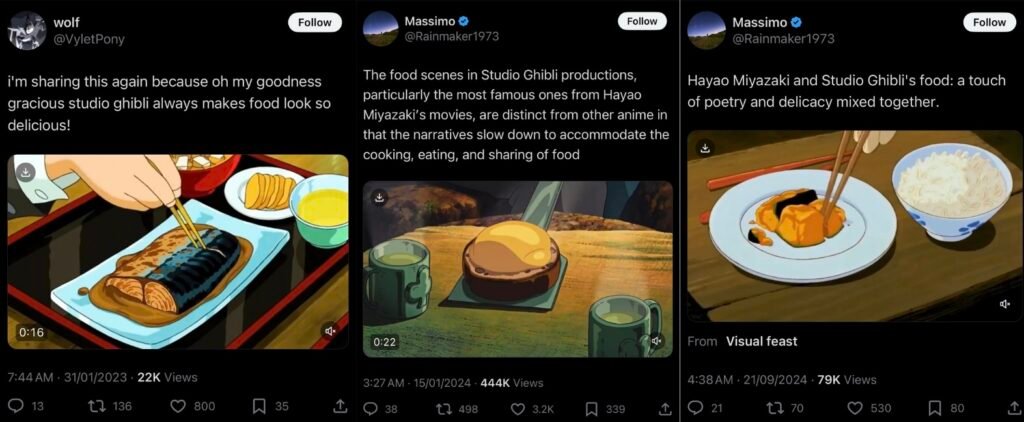
Throughout the years there have been numerous films from big name studios to indie creators from the tropical world or about the tropical world, and in practically all of it, there is a central focus on food. But we often see many X (formerly Twitter) engagement-bait posts showcasing the food of Studio Ghibli films.
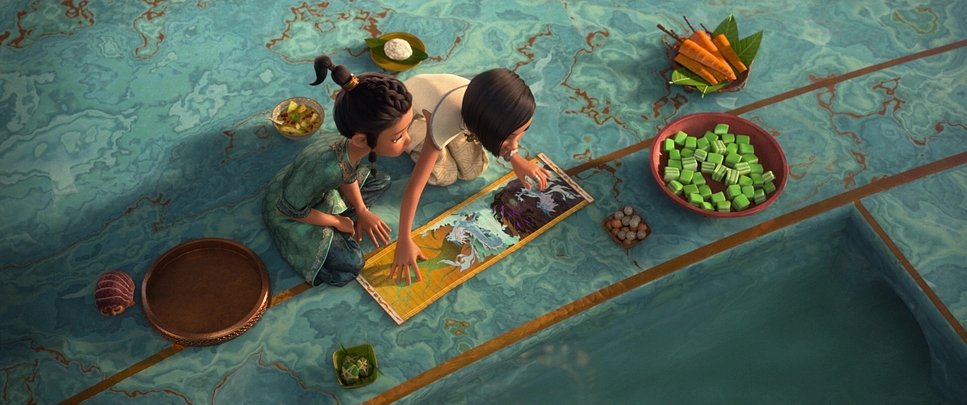
But why is it that other forms of animated food like the Baloo cactus-fruit kebab scene in The Jungle Book (1967) or the shots of tom yum, banh tet, and kuih lapis in Raya and the Last Dragon (2021) aren’t given the same treatment?
Aside from animation styles, art direction, and such, I think that the tropical world and the indigenous foods, vegetables, and fruits from this area of the world are perfect when translated into art or animation. And throughout this article, I’ll be referencing a few popular animated films where the film is either set in tropical countries or the framework is based on a specific nation/culture to further emphasise my point.
Why?
Now, you might ask, why am I so adamant about including the tropical world into this conversation? What does Studio Ghibli and the Internet’s obsession with animated Japanese cuisine have anything to do with Asam Laksa or Kamounia stew?
Following up on the fact that animation doesn’t adhere to the rules of OUR universe, so much could be achieved when we combine art and food.
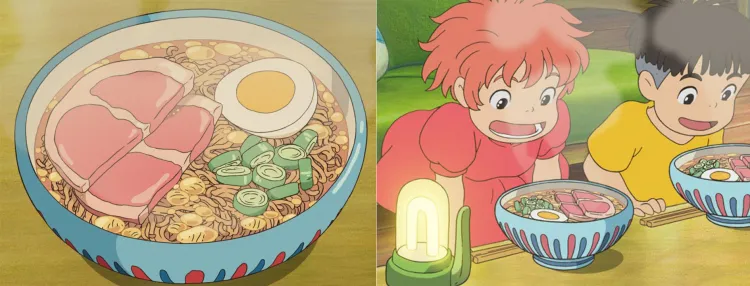
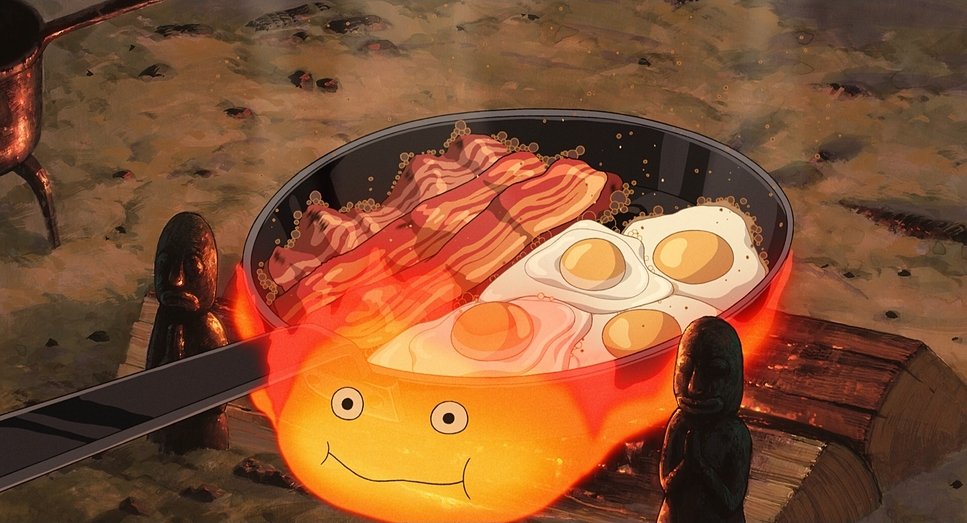
Anime animators understand this fact perfectly; when we look at stills from Howl’s Moving Castle, Spirited Away, Isekai Izakaya, and more, most of the scenes are still shots of the food being cooked. Meat or eggs glimmering in the light, oil or broth swishing around a bowl or pan, and steam coming from the hot meal.
Animation is painstakingly made, and during production, all the shots are planned and laid out before they even begin drawing the final product. Every frame has to be thought out, from the composition, to the lighting, the colours, and every movement needs what they call an ‘inbetween’ shot. From one movement to the other, a middle frame needs to be drawn to denote the movement and the speed, or the tilt of a pan or hand. There are no mistakes in animation because it takes a stupidly long time to even animate a 5 second clip in its entirety, so why would they spend time on scenes that would not be necessary, like a long sequence of food being made, with little-to-no dialogue? And why make it so beautiful?
Food and Culture
Because, simply, food is a huge part of any culture’s identity. Food tells a story; what does your mom make you when you’re under the weather? What snacks do you eat at a friend’s Diwali celebration? Which dish from your culture do you eat for festivities, or when you want something sinful? The ramen from Ponyo reminds us of a warm, home-cooked meal. The breakfast in Howl’s Moving Castle is eggs and bacon, traditionally a more ‘Western’ breakfast, makes us think of an easy, daily family breakfast, an important theme in the film surrounding the ‘found family’ trope. The food in Spirited Away is egregiously decadent and luxurious. The fish being large and fleshy, meaning it would have been expensive; dishes being plated elaborately or stacked high, reminds us of large buffets or a meal during festivities.
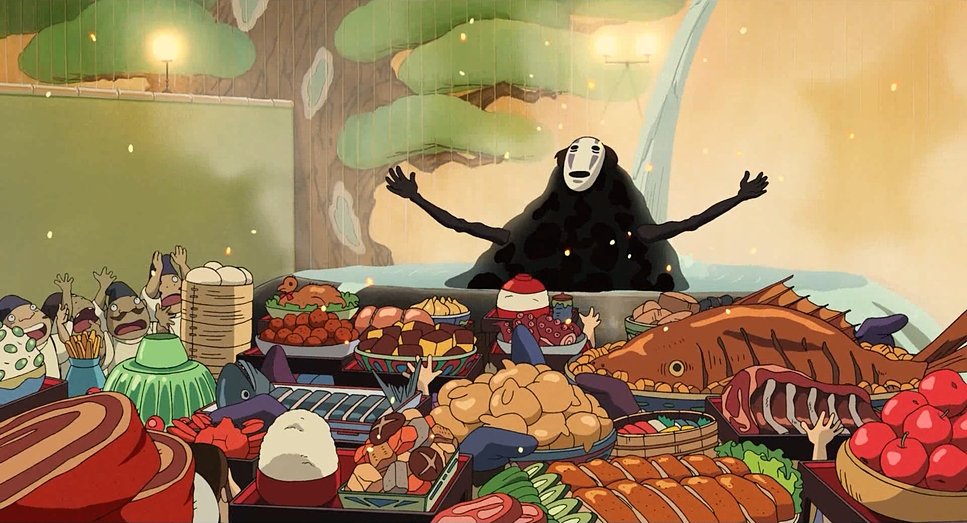
Food holds meaning, whether it reminds you of family, luxury, or a celebration, it’s all tied to our memories and what it could mean culturally.
And it has to look appetising.
So following these ideas of food holding memories and meaning, alongside the freedom of the animation medium, let’s combine these and apply it to how animation has handled this, and why there should be MORE in popular animated films.
Every scene involving food from The Jungle Book (India), to Encanto (Colombia), Tarzan (Cameroon), Moana (Hawai’i, Samoa, Tonga, Tahiti), and ESPECIALLY Raya and the Last Dragon (Southeast Asia) is surrounded by the concept of family and bonding. I can’t speak for all cultures, but the way we at Jungle Kitchen grew up, food was a love language. To prepare a meal, to have your father bring up chunks of cut mangoes and pineapples in a bowl to your room, to have kuih bought by your family to share with friends while they were over at your place; that is the staple experience for us. And while I don’t think it’s exclusive to the tropics, there is an undeniable relationship between food and our narrative.
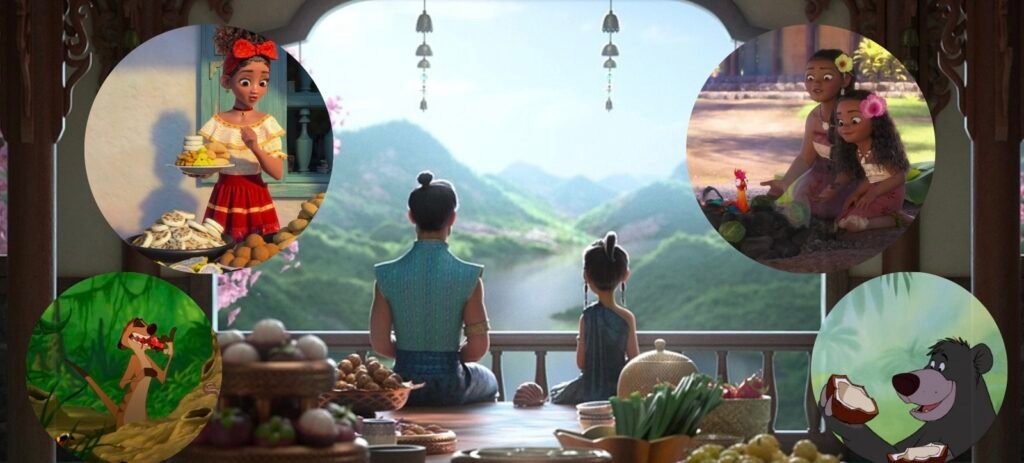
Following that train of thought, since animated films don’t have to follow the hard and fast rules of realism: the exaggeration of colours, textures, and scenarios, combined with the enchanting backdrop of tropical cultures and its food, you would think it’s a match made in heaven.
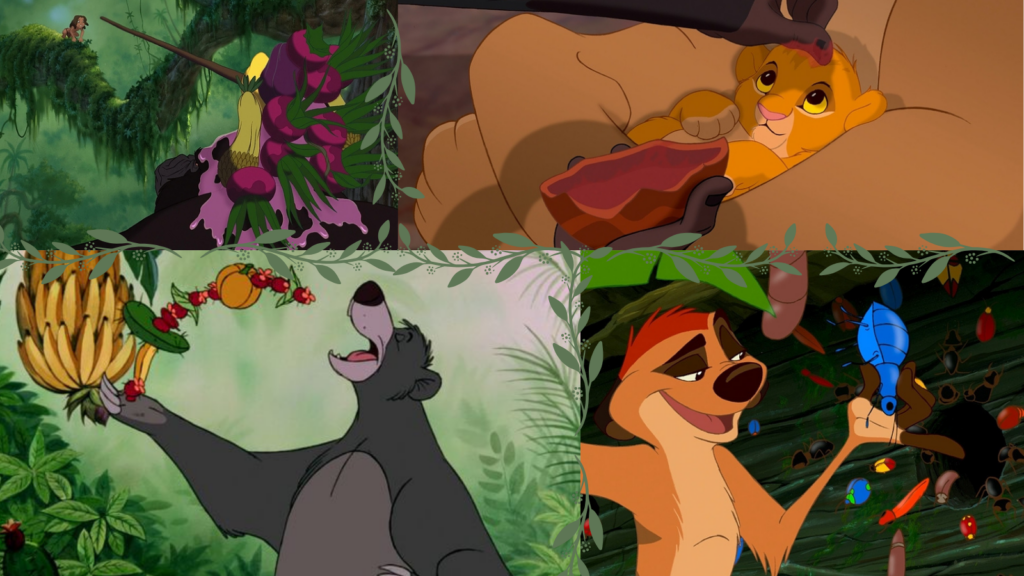
You can’t eat a banana or make a natural kebab like Baloo, you can’t spear juicy, colourful fruit into a hat for your step-gorilla, you can’t use the baobab fruit to paint, nor does it even look that red in real life. And horrifyingly enough, Timon and Pumbaa made bugs look tasty. None of these scenarios would make sense in real life, but this medium allows for such iconic scenes, all inspired by the tropics.
We still would not recommend you eat bugs in the Cameroon jungle. Instead, try Ndole or Fufu and Eru!
“Can we talk about Raya and the Last Dragon, yet?”
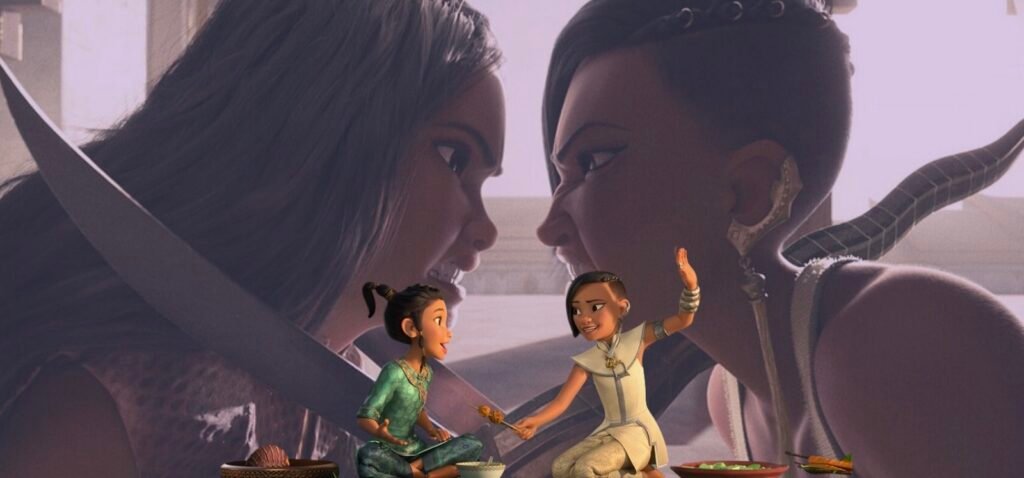
I absolutely adore this film. It’s actually what inspired me to write this piece, as I think there is so much that could be done if more animated films were to explore the tropical world. The yummy pot of tom yum being made by Chief Benja, Raya and Namaari sharing kuih lapis, juicy lychee eaten by Tuk Tuk, jackfruit jerky, and more hidden throughout the movie. These scenes are not just there just for the sake of having it there.
Every scene where characters share a meal, it was a trust-building experience. To eat with someone, is to trust them, and bond with them. And for someone to betray that trust after you sit and dine at the same table, or perhaps, like the Red Wedding in Game of Thrones, during the meal, is quite hateful, and narratively it tells you so much about the characters and how they operate. Was this their plan all along? Can you ever trust them again? Or was there a glimmer of honesty at some point?
In all honesty, this might just be a long-winded way of telling you that you should go back and rewatch these films from a different perspective. And if you’d like, share your own GIF compilation of the food in these clips on social media, because it deserves more recognition than it does.
What's Your Reaction?