












The Death (and return) of the Rijsttafel

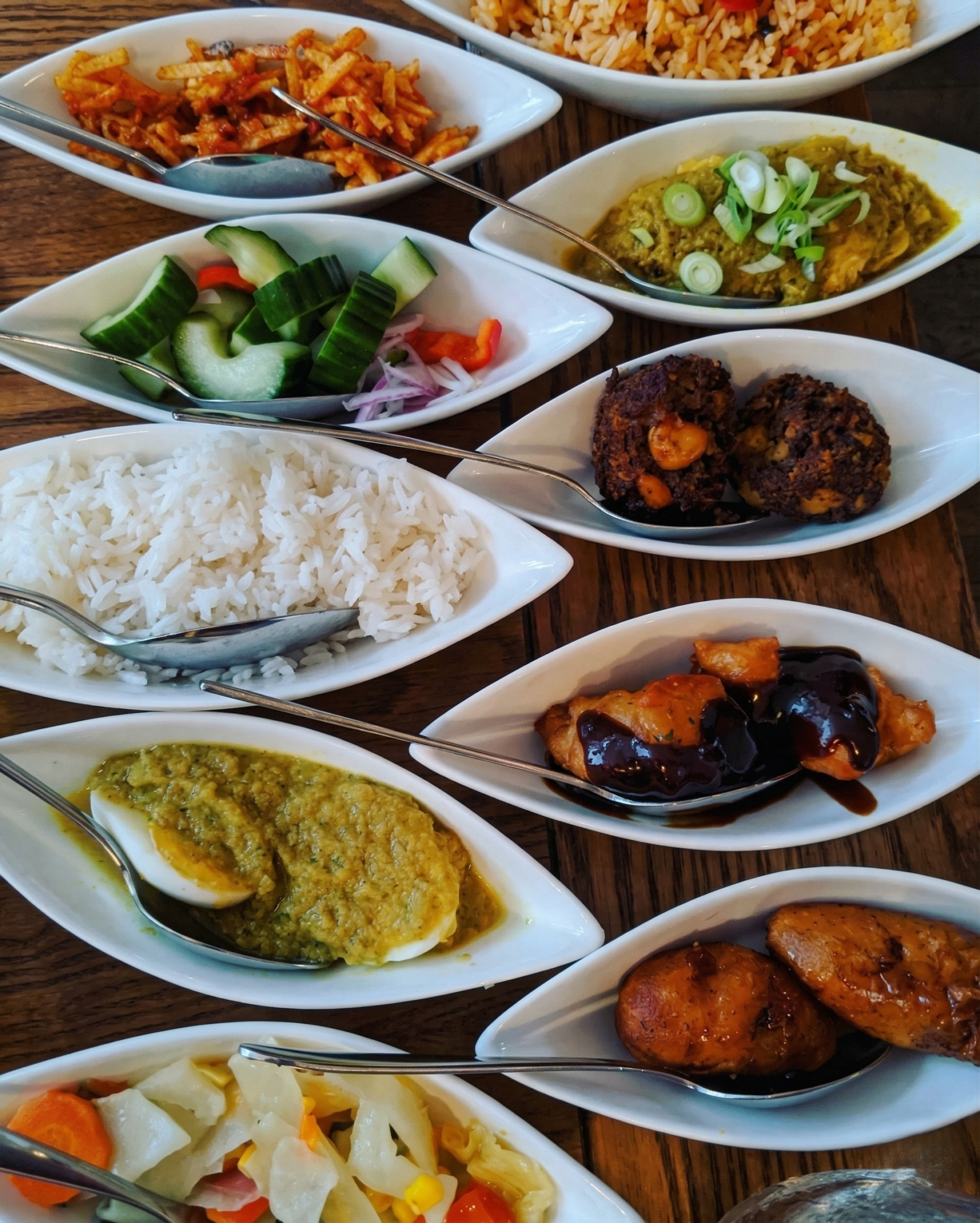
For centuries, Rijsttafel sat at the apex of the Indonesian food hierarchy. Certainly, as far as the archipelago’s Dutch colonial rulers were concerned, the extravagant rice table — with up to 40 dishes served with piles of fragrant white rice — was the Indonesian food experience.
The dishes were a literal procession of ingredients from across the vast archipelago.
Unctuous coconut milk-infused opor ayam, crunchy kerupuk crackers, spiced rendangs, lighter chap chyes, and endless sambals as sides. Cardamom, clove, pandan, nutmeg, galanga, star anise, soy sauce, lemongrass, coconut — the wealth and bounty of the empire was laid out for colonial officials, their guests and later tourists and visitors to the Dutch East Indies to enjoy.
In the colonial era, many visitors were experiencing these flavors for the first time. Presented on fine China and gleaming silverware, carried by formally dressed servants, it was a performance and tour de force — with more than a hint of colonial extraction and exploitation.
For the Rijsttafel was never authentically Indonesian. It was contrived by Dutch hosts to show off the wealth of their colony. It combined dishes — Javanese-style Gado Gado, Sumatran Rendang, Chinese Chap Chye, Balinese Bebek Betutu — from culinary traditions that wouldn’t be found together on a local table. It also included Babi Kecap, a pork dish that would naturally be rare in most of Muslim majority Indonesia, and perkadels, potato fritters introduced through Dutch influence.
The aim was never authenticity; it was presenting the greatest culinary hits of the colony. And the art of Rijsttafel was to ensure the different dishes, traditions, and flavors came together in a harmonious meal. Well executed, the resulting multi-dish feast was delicious, extravagant, and memorable. For years after the Dutch Empire vanished, the colonial banquet survived, and you would encounter Rijsttafel in old members’ clubs and restaurants in Malaysia and Singapore far into the 2000s.
But today, this old-school feast is hard to find. The last Rijsttafel-specialized restaurants in Singapore and Malaysia vanished about a decade ago. The dishes are elaborate and time-consuming and, as it was never a native tradition, without Dutch patronage, this grand feast is hard to come by even in Indonesia.
A few restaurants paying homage to the colonial tradition exist in Jakarta and Semarang, for tourists or the nostalgic who remember the spectacle — but it’s barely a living tradition.
Today’s visitors to Indonesia are likely to encounter single dishes like soto ayam and nasi goreng, which are staples of urban Indonesia. Where multi-dish cuisine appears, it typically takes the form of regional restaurants such as Minangkabau warungs specialising in Sumatran delicacies or Minahasan restaurants featuring the food of North Sulawesi.
Indonesia has moved beyond the Rijsttafel and now serves more authentic versions of its diverse cuisine. The dishes that comprised the rice table — gado gado, rendang — exist but are rarely served together in a grand assemblage. So a colonial legacy is fading away.
Or is it?
The tradition lives on — not in Jakarta or Semarang, but in a city thousands of miles from Indonesia: Amsterdam.
Rijsttafel, as a creation of Dutch colonialism, was brought back to the Netherlands as the empire wound down. It became prominent there in the 1960s as colonial officers and mixed-race Dutch-Indonesians began moving to the Netherlands in large numbers, many settling in Amsterdam and The Hague.
Initially, the Rijsttafel tradition was kept alive by these returnees, with mixed-heritage Indische people working to preserve the flavor of their Indonesian roots. But over the years the exotic flavors won the hearts and minds of the entire city, drawing in patrons who had never set foot in Indonesia.
Today, Rijsttafel is ingrained into Amsterdam’s food scene. Dozens of restaurants in the Dutch capital serve a version of Rijsttafel — not the full 40-plus dishes of the colonial table, but the babi kecap, perkadels, and beef semur continue to be part of dining rituals and celebrations.
While many Indonesian restaurants in Amsterdam do focus on nostalgia for the colonial era, others go beyond pure nostalgia and introduce new dishes and flavors from Indonesia. Spice levels have increased as people in the Netherlands have become more exposed to authentic Indonesian food, and today Rijsttafel remains a living tradition at the heart of Europe. Still fulfilling its original purpose: bringing the best of Indonesia to a single table.
So the old colonial feast hasn’t quite vanished into history yet — you can try it if you ever find yourself in Amsterdam.
In fact, Rijsttafel may also have a second modern home — Singapore.
Amsterdam’s Rijsttafel is a direct descendant of the colonial feast born in the Dutch East Indies, but Singapore’s Nasi Padang tradition is more of a cousin than most people think.
Nasi Padang has a specific meaning: literally rice in the style of Padang, a city in Sumatra famous for its multi-dish serving style. In Padang City, restaurants specialise in Minangkabau food — the delicious cuisine of the region, which was likely the inspiration for the original Rijsttafel. However, Nasi Padang restaurants in Singapore don’t serve strictly traditional Minangkabau food. Dishes like Gado Gado, Asam Pedas, and Tahu Telur are staples of Singapore’s Padang restaurants but are not traditionally part of the Minangkabau canon.
This reflects the heritage of Singapore Malays, who by ancestry consist of different groups from across Indonesia and Malaysia. So Padang restaurants in Singapore serve food in the Padang style — many dishes around rice — but draw from a much wider pantry. Often, they feature a mixed array of dishes from different Indonesian and Malaysian traditions, including Peranakan (Chinese-influenced) dishes like Tahu Telur, and Malay dishes from the Peninsula like Sayur Lodeh and Asam Pedas.
This assemblage of dishes from across Indonesia and Malaysia around rice channels the spirit of Rijsttafel. And Nasi Padang in Singapore is a vibrant tradition — heritage is kept alive, but new dishes and adaptations also appear.
Proving that great food ideas never die — and that bringing together many dishes from Indonesia and Malaysia into a single harmonious meal is an idea that should continue long into the future.
In fact, it has more work to do. Traditional rice tables emphasise dishes from Sumatra, Java, and Bali — but some Indonesian traditions are left out. Dishes from Eastern Indonesia — Ambon and the Moluccas — are missing, and these regions have plenty to literally bring to the table.
So Rijsttafel, two or three centuries later, still has more work to do — introducing more dishes and flavors to new generations of diners in Amsterdam, Singapore, and, the way things travel, perhaps back in Indonesia too.
The colonial Rijsttafel is dead. Long live the new Rijsttafel.