

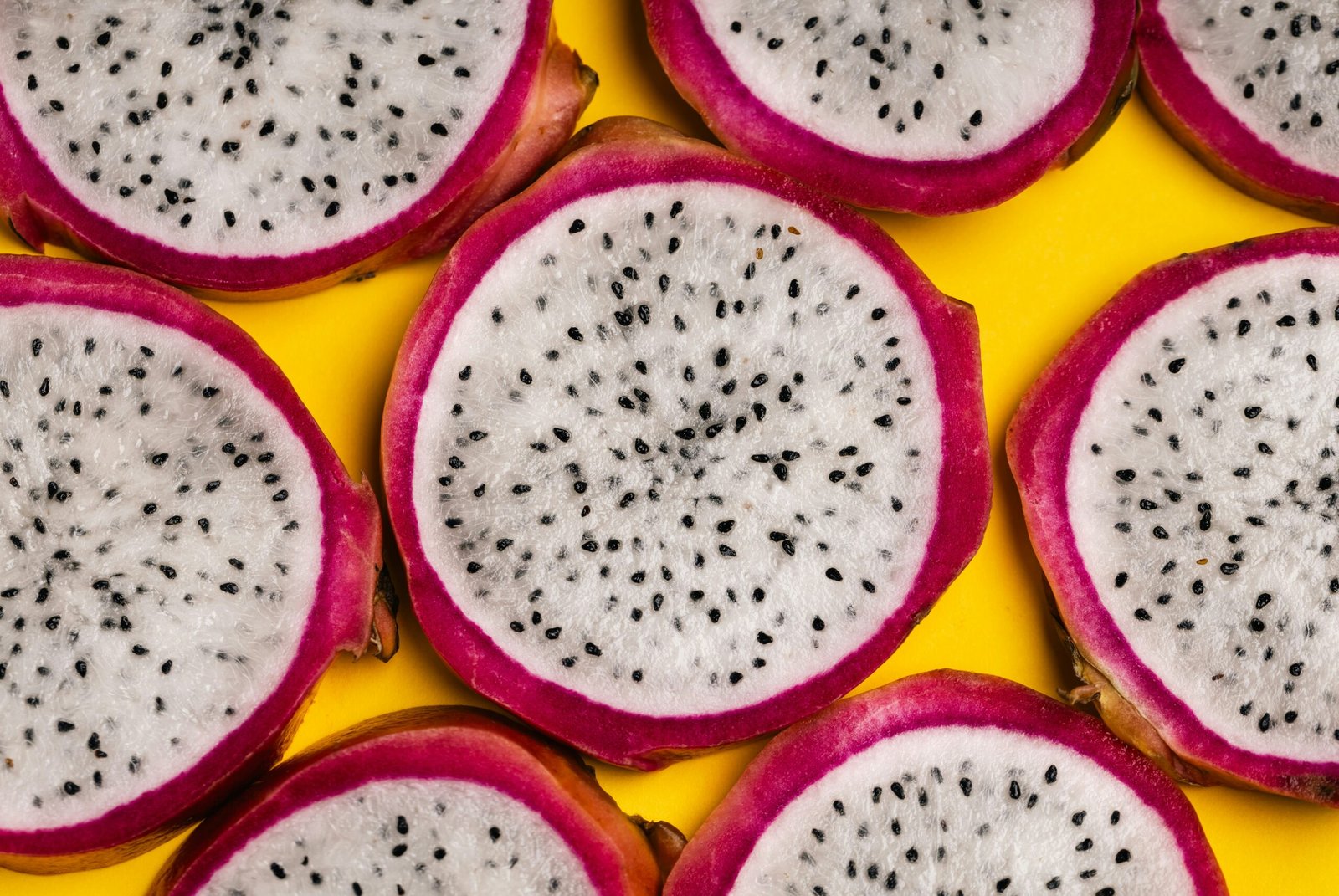
If you want to test the geographical assumptions of a Western foodie, walk into any high-end juice bar from Los Angeles to London and order a pitaya bowl.
When they hand you that impossibly vibrant, electric-magenta puree topped with toasted coconut and chia seeds, ask the person behind the counter where the fruit comes from. Nine times out of ten, they will point you toward Southeast Asia. They’ll confidently mention a yoga retreat in Bali, a bustling wet market in Bangkok, or a terraced farm in Vietnam.
It makes sense. The dragon fruit looks like it was custom-designed to be the mascot of a Southeast Asian postcard. It has the scales of a mythical beast, a neon complexion, and a name that practically screams ancient Eastern lore.
But if you actually travel to the Indonesian archipelago and sit down with an older farmer in East Java or Sumatra, they will tell you something that completely shatters that postcard illusion. If you hand them a dragon fruit and ask about its ancestral roots in their culture, they will likely laugh, shake their head, and tell you: “We didn’t eat these when we were kids.”
And they are telling the truth.
The dragon fruit isn’t an ancient Asian staple. In places like Indonesia, large-scale commercial cultivation of the fruit didn’t really kick off until the year 2000. It is, for all intents and purposes, a millennial crop.
And it’s a microcosm of a much larger phenomenon: we love to imagine the tropics as a static museum. The Western narrative suggests that tropical ingredients have just been sitting exactly where they are since the dawn of time, waiting patiently for a European explorer to document them, or a modern wellness influencer to blend them.
The real story of the dragon fruit destroys that narrative. It’s a story of a Mesoamerican native, an insulting colonial misunderstanding, and a lightning-fast agricultural exchange between the nations of the Global South.
The Stolen Pitahaya
Before we can talk about how the dragon fruit conquered Southeast Asia, we have to travel back to its actual birthplace: the tropical belts of Central and South America.
Long before the Spanish galleons arrived to carve up the map, the indigenous peoples of the Americas—including the Taino and the Maya—were intimately familiar with this striking plant. They didn’t call it a dragon fruit; they called it the pitahaya, a name that translates roughly to “scaly fruit.”.
If you picture a fruit orchard, you probably imagine neat rows of sturdy trees quietly soaking up the afternoon sun. The pitahaya refuses to conform to that picture. It is a vining, epiphytic cactus. It doesn’t want to stand on its own; it wants to climb. It sends out aerial roots, grabbing onto the bark of towering rainforest trees, scaling vertically to escape the shaded understory and reach the canopy.
But its climbing habit isn’t even its most dramatic trait. The botanical theatre of the pitahaya happens after dark.
The cactus produces spectacular white flowers, often the size of a dinner plate. But they don’t bloom for the daytime bees or the morning birds. The pitahaya works the night shift. As the sun sets, the tightly wound buds begin to unfurl, releasing a heavy, intoxicating perfume into the humid night air. This is a calculated evolutionary move designed to attract specific nocturnal pollinators: bats and large sphinx moths.
And here is the catch: the flower only lives for a single night.
By the time the morning sun hits the petals, the bloom wilts and dies. If it wasn’t pollinated during that brief, midnight window, there will be no fruit.
The indigenous communities of Mesoamerica didn’t just casually forage this fruit; they understood the biology, the timing, and the rhythm of the night-blooming cactus. They utilized the nutrient-dense flesh for sustenance and hydration in dry climates, turning a precarious, nocturnal vine into a reliable food source.
But when the European empires finally showed up, they looked at it and thought: what a great ornamental flower.
A Trophy in the Conservatory
Fast forward to the mid-19th century. The French had aggressively expanded their empire into Southeast Asia, establishing the colonial territory of French Indochina, which encompassed modern-day Vietnam, Laos, and Cambodia.
When the French established these colonies, they didn’t just bring soldiers and administrators; they brought their rigid, European ideas of how the natural world should look and function. They built sprawling colonial estates and tasked their botanists with sourcing plants from across their global networks to fill their gardens.
Somewhere along the line, a French botanist or clergyman laid eyes on the pitahaya.
They saw the vines and midnight blooms, and they made a decision that perfectly encapsulates the colonial mindset: they decided it was a decoration.
The French imported the pitahaya to Vietnam not to feed the local population, not to study its agricultural potential, and certainly not to respect its Mesoamerican roots. They brought it over because they thought it would look pretty winding up the trellises and brick walls of their colonial villas.
They looked at a drought-tolerant, nourishing food source and reduced it to a lawn ornament.
For decades, the pitahaya languished in this insulting role. It was a trophy of empire, a botanical novelty meant to impress visiting dignitaries over evening cocktails. The French treated the plant the exact same way they treated the people they colonized: as something to be controlled, admired for its aesthetics, and entirely stripped of its inherent value and agency.
But you can’t keep a good plant down, and you certainly can’t hide a valuable food source from the people who actually know how to read the land.
Reclaiming the Cactus
While the French were busy admiring their conservatory walls, the Vietnamese farmers living and working around those estates were paying attention.
They watched the strange fruits develop after the midnight blooms. They tasted the crisp, watery flesh. And more importantly, they noticed how the cactus behaved in the soil. They saw that it thrived in the sandy, nutrient-poor, drought-prone coastal regions where more traditional crops struggled to survive.
Eventually, local farmers simply ignored the colonizers’ landscaping project. They took cuttings of the cactus, moved them out of the gated villas, and began planting them in their own fields.
But they didn’t just adopt the pitahaya; they optimized it. They gave it a new name—thanh long, or “green dragon”. Farmers in provinces like Binh Thuan realized that if they wanted to turn this night-blooming rebel into a commercial powerhouse, they couldn’t just wait around for the bats.
Remember that fleeting, one-night-only blooming window? The Vietnamese farmers figured out how to hack it.
They developed a technique using incandescent lightbulbs. By stringing thousands of lights across their fields and turning them on at night, they tricked the cactus into thinking the days were longer. This light manipulation forced the plants to flower during the off-season, shattering the natural limitations of the crop and allowing for a year-round harvest.
If you drive through Binh Thuan at night today, the dragon fruit farms look like glowing, alien cities stretching to the horizon. It is a stunning visual testament to human ingenuity.
This wasn’t an innovation funded by a Western agricultural corporation. It wasn’t taught in a European university. It was developed entirely by local farmers who took an imported “lawn ornament” and transformed it into the bedrock of a multi-million dollar export industry. They reclaimed the cactus, asserting their own botanical mastery over the arrogance of the empire.
The Global South Exchange
By the late 20th century, Vietnam had thoroughly colonized the dragon fruit back. But the exchange was just getting started.
This brings us back to that older Indonesian farmer who remembers a childhood without the fruit.
If you look at the standard model of global agriculture, the movement of crops is usually dictated by the Global North. A Western corporation finds an ingredient in the tropics, patents the seeds, builds a massive supply chain, and dictates exactly where and how it is grown and sold.
The dragon fruit bypassed that corporate spreadsheet entirely.
Around the late 1990s and early 2000s, as the Vietnamese thanh long industry boomed, the knowledge, the cuttings, and the techniques began to drift south across the South China Sea.
This was an organic, farmer-to-farmer exchange between the nations of the Global South. Agricultural workers traveling between Vietnam, Thailand, the Philippines, and Indonesia carried the potential of the dragon fruit with them.
When the crop finally landed in Indonesia in a significant way, the local farmers didn’t need centuries of ancestral tradition to figure it out. They didn’t need to consult the history books.
They took one look at the biology of the plant, analyzed their own volcanic, equatorial soil, and went straight to work. They adapted the Vietnamese lighting techniques. They mastered the precarious art of manual night-pollination, walking the fields under the moonlight with small brushes to do the work of the absent Mesoamerican bats, ensuring every single massive white flower resulted in a piece of fruit.
In the span of a single generation, Indonesia built a booming dragon fruit industry from scratch. Today, you can find sprawling dragon fruit plantations across Java, Sumatra, and Bali, managed by farmers who speak about the nocturnal habits of the cactus with the kind of casual expertise you would expect from someone whose family had been growing it for a thousand years.
The Blueprint of Tropical Brilliance
When a Western wellness brand markets the dragon fruit today, they lean heavily into the myth of the static tropics. They want you to believe that the fruit is a mystical Asian secret, plucked from a pristine jungle where time has stood still.
They sell a fairy tale because it is easier to market a “timeless discovery” than it is to explain the complex, rapid-fire reality of tropical agriculture.
But the reality is a lot more impressive.
The story of the dragon fruit proves that the Global South is not a museum. It is a massive, dynamic, interconnected laboratory. It is a place where a Mesoamerican staple can be stolen by European hubris, completely ignored by colonial science, and then brilliantly salvaged and optimized by Vietnamese farmers.
It is a place where an Indonesian farmer can take delivery of an entirely foreign crop in the year 2000, learn to pollinate it by moonlight, and dominate the market before their children even finish school.
The next time you slice open a dragon fruit, look at those scaly pink bracts and the densely seeded flesh and respect what it actually represents: the resilience of indigenous Mesoamerican botany, the failure of the colonial mindset, and the brilliance of the farmers who actually feed the tropical world.