

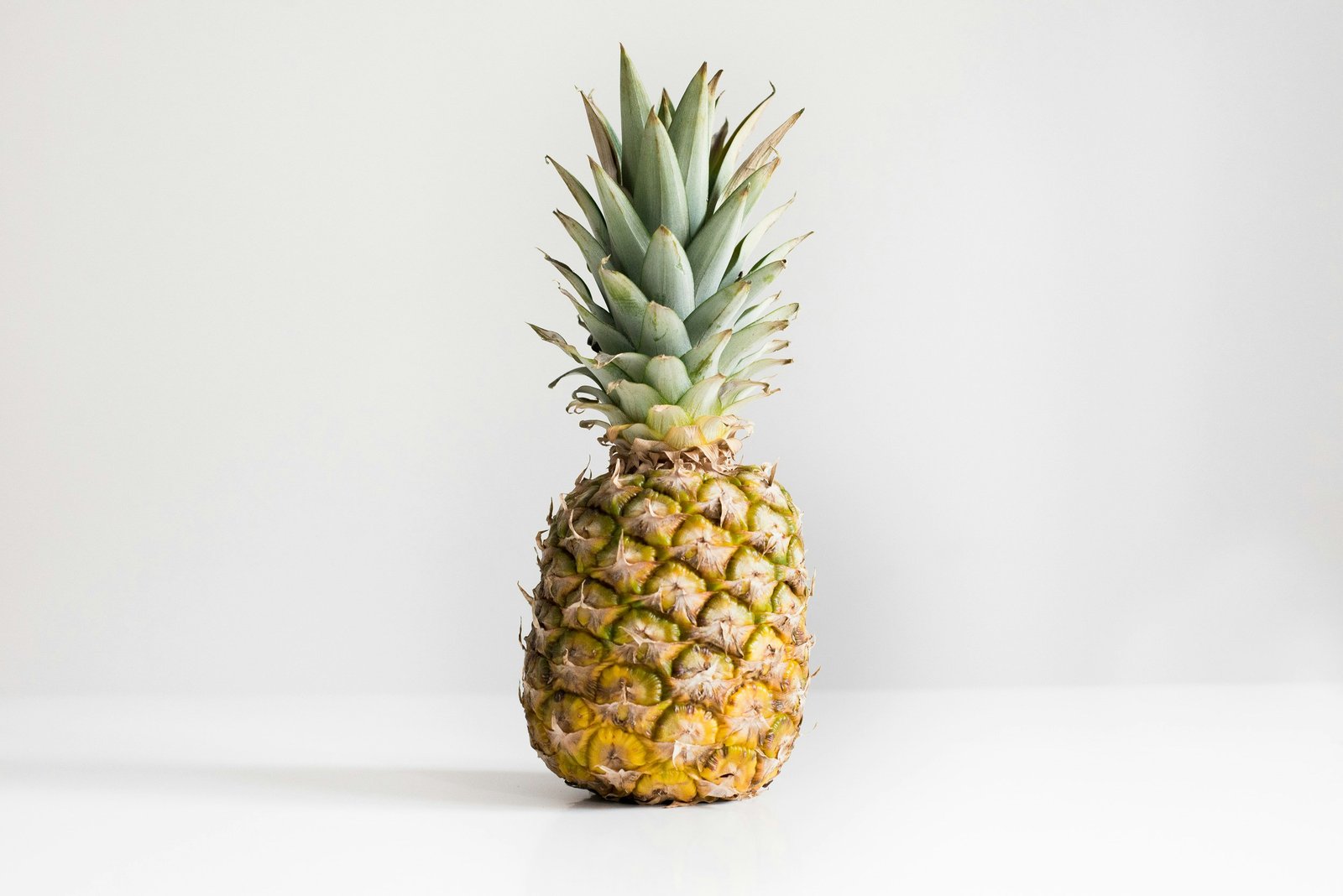
If you walk into any supermarket today, you’ll find them piled high in the produce section. They are cheap and ubiquitous. We slice them into rings for upside-down cakes, dice them into salsas, and, some people even throw them on pizzas.
We are, of course, talking about the trusty pineapple. Hardly a fruit worth writing home about, let alone flexing at social events.
But rewind the clock to 18th-century Europe, and a very different picture emerges. In the drawing rooms of London and Paris, the pineapple was the absolute pinnacle of luxury. It was a status symbol so potent, so rare, and so astronomically expensive that aristocrats didn’t actually eat them.
They rented them out instead.
You read that correctly. For a small fortune, a lord or lady could lease a pineapple for an evening, carrying it around a high-society gala like a designer handbag. It was the ultimate flex of wealth—a fruit paraded around until it eventually rotted and was discarded.
The story of the pineapple’s journey from a South American staple to an unusable capitalist prop is one of the more peculiar exhibits of the absurdity of empire. And it perfectly highlights the gap between how indigenous communities and colonial powers valued the food of the tropical world.
We aren’t here to gasp at the opulence of Georgian dinner parties. We are here to look at how a something as delicious as a pineapple was stripped of its utility and turned into a punchline of European excess.
The Tupi-Guarani Legacy
To properly appreciate just how ridiculous the idea of a rental market was, let’s take a closer look at the fruit in question.
When Christopher Columbus landed on the Caribbean island of Guadeloupe in 1493, his crew stumbled across the pineapple and, surprise surprise, immediately claimed it as a “discovery.” They marveled at its rough exterior and intensely sweet, fragrant flesh, rushing to load the “pine of the Indies” onto their ships to impress the Spanish court.
But like so many colonial “discoveries,” Columbus had merely tripped over the finish line of a botanical marathon that had been running for centuries.
You may be shocked to hear that the pineapple (Ananas comosus) didn’t just appear out of thin air on a Caribbean beach. Its true home lies thousands of miles south, deep in the Paraná-Paraguay River drainage basin of South America. And it didn’t look or taste anything like the fruit we know today.
The wild ancestor of the pineapple was small, heavily seeded, and intensely acidic—hardly a fruit that would later obsess European nobility.
Enter the Tupi-Guarani people.
Long before European ships even figured out how to cross the Atlantic, these indigenous communities were executing complex agricultural science. Through generations of selective breeding, they cultivated the wild pineapple, isolating the sweetest, largest, and most robust variations. They slowly engineered a seeded, fibrous wild plant into a nearly seedless, juicy, and nutrient-dense powerhouse.
The Tupi-Guarani didn’t just grow the fruit; they integrated it into their culture and survival. They called it nanas, meaning “excellent fruit.” They understood its rich vitamin C content long before the West understood scurvy. They used the fibrous leaves to weave resilient textiles and ropes. They fermented the flesh into wines and utilised the powerful enzyme bromelain (which breaks down proteins) to tenderise tough meats and treat inflammation.
By the time the fruit made its way up through Central America and into the Caribbean through indigenous trade routes, it was food, medicine, and material, all rolled into one spiky package.
When the Spanish finally showed up, they walked into a highly developed indigenous laboratory, tasted the results of centuries of labour, and decided they wanted the credit.
The Climate Reality Check
The European obsession with the pineapple was immediate. Returning explorers wrote breathless accounts of this miraculous golden fruit, sparking a frenzy among the nobility. Everyone wanted a taste of the “King of Fruits.”
There was just one logistical problem: the pineapple absolutely refused to grow in Europe.
See, the fruit is a tropical obligate. It demands intense heat, relentless humidity, and well-draining, acidic soil. It requires a long, uninterrupted growing season to produce a single, perfect fruit.
European winters, as you may know, are none of those things. The pineapple plants were DOA.
For the empires of the 16th and 17th centuries, this was a bitter pill to swallow. They were used to claiming whatever they wanted from the globe, transplanting crops to suit their economic needs. But the pineapple just wouldn’t cooperate.
They tried transporting the fresh fruit back on their slow-moving galleons, of course, but that almost always ended in disaster. The fruit would rot in the humid hulls long before it ever reached a royal court.
And it was this scarcity that acted as the catalyst for the madness that followed. Because the fruit was nearly impossible to acquire, it became the ultimate symbol of wealth and power.
The Hothouse Arms Race
By the late 17th century, European gardeners decided that enough was enough. They were going to bend the pineapple to their will, no matter the cost. If the climate wouldn’t cooperate, they would simply build a new climate.
This kicked off a ludicrous, and eyewateringly expensive botanical arms race among the British and Dutch elite. Elaborate “pineries”—highly specialised, glass-roofed hothouses—began popping up everywhere, designed specifically to force a pineapple to grow in the freezing rain of Northern Europe
These structures were logistical nightmares, as you might expect. They required constant heating, usually from coal stoves or deep trenches filled with—get this—fermenting horse manure and tanners’ bark, which generated heat as it decomposed.
Imagine the scene: an army of gardeners working around the clock, shoveling raw manure and stoking coal fires, desperately trying to keep a single tropical plant alive while snow fell on the glass roof above. The financial cost was staggering. Historians estimate that successfully cultivating a single pineapple in a British hothouse in the 1700s cost the equivalent of £6,000 (roughly $8,000 USD) in today’s money.
In short, the British elite were lighting money on fire, not to feed people, but to prove they could conquer nature. And just when you thought the absurdity had reached its peak, the elites took it to a whole new level.
But they were faced with a dilemma: when you spend $8,000 to grow a single piece of fruit, do you really want to eat it, or would you rather maximise ROI by turning the fruit into a source of passive income?
The Rent-a-Pineapple Economy
By the 1700s, the pineapple had achieved a mythical status. If you managed to produce one, or if you were wealthy enough to buy one from a successful pinery, you displayed it like a crown jewel.
The fruit became the centrepiece of aristocratic Georgian dinner parties. It was placed on a pedestal in the middle of the dining table, surrounded by fine silver and crystal. It signaled to every guest in the room that the host possessed something akin to god-like powers over the natural world.
Predictably, demand for pineapples soared. But supply was so low that very few could afford the astronomical prices. Enterprising merchants and head gardeners realised that selling the fruit was the wrong game. The real money was in leasing pineapples for a few hours to the aristocrats vain enough to derive their self-worth from a fruit.
If you were a social climber throwing a party and needed to impress your guests, you could head to a specialized merchant and rent a pineapple for the evening. You would carry it around the party, casually gesturing with it, letting everyone marvel at your supposed wealth. You would place it on the table, bathe in the admiration of your peers, and then, before the night was over, carefully return it to the merchant.
That same pineapple would then be rented out to the next desperate aristocrat the following night.
This charade would continue until the fruit finally began to smell. Then, and only then, would the merchant finally sell it off to someone wealthy enough to actually eat it.
17th-century pineapplenomics.
Architecture, Art, and Absurdity
The pineapple obsession was never going to stop at dinner parties. It had to impose its will on every facet of aristocratic life. In the 18th century, the fruit become the dominant design motif.
Because the it represented ultimate hospitality and wealth, aristocrats began carving pineapples into everything they owned. You can still see the remnants of this madness today. Pineapples were carved into the stone pillars of grand estates, woven into silk wallpaper, cast into silver teapots, and painted onto expensive porcelain.
The most famous example is the Dunmore Pineapple in Scotland. In 1761, John Murray, the 4th Earl of Dunmore, decided that a simple hothouse wasn’t enough. He commissioned an enormous, 45-foot-tall stone cupola shaped exactly like a giant pineapple to sit atop his garden pavilion. It remains one of the most bizarre and brilliant pieces of architectural folly in Britain.
The Pineapple Today
The era of the rented pineapple eventually crashed.
By the late 19th century, the advent of steamships and the expansion of colonial plantations in places like Hawaii (which, it must be noted, involved the brutal overthrow of the Hawaiian monarchy by American fruit interests) meant that pineapples could finally be shipped quickly and reliably.
The fruit flooded the Western market. The pineries were abandoned, the rental merchants went out of business, and the pineapple went from a $8,000 status symbol to a cheap, canned commodity.
The West finally got what it wanted: endless, cheap access to the “King of Fruits.” But in the process of industrialising the pineapple, we lost the plot entirely. We forgot the centuries of indigenous wisdom that engineered the fruit in the first place, and we laughed off the absurdity of the rental market as a quirky historical footnote.
So, the next time you find yourself holding a pineapple, take a moment to really look at it.
You aren’t just holding a garnish for a cocktail or a controversial pizza topping. You are holding a piece of tropical history that, for a brief, absurd moment, held the entire European elite in the palm of its spiky hand.