

When you picture a tasting menu at a high-end restaurant, you’re likely imagining stark white tablecloths, a chef wielding stainless-steel tweezers, and patrons whispering over thimble-sized portions of foam.
We have a different idea in mind. We call it the Resistance Tasting Menu.
It isn’t a tour of European terroir or a showcase of molecular gastronomy. We are taking you into a different kind of kitchen, where the heat is oppressive and the chefs are working with the scraps left behind by empire.
On today’s menu is 14 courses highlighting the indigenous mastery of South Pacific cuisine.
* * *
When Western travel brochures talk about the South Pacific, they invariably sell you a blank slate. They pitch empty white-sand beaches, nodding palm trees, and the promise of “escaping civilization.”
It’s a persistent colonial trope. It assumes that before European ships arrived, this vast expanse of ocean was simply waiting around to be discovered.
We are here to correct the record. The South Pacific was never an empty paradise; it was—and is—a thriving hub of indigenous navigation, marine biology, and agricultural engineering. Long before the British could reliably sail out of sight of their own coastlines, Austronesian and Polynesian navigators were crossing the largest ocean on Earth, carrying with them a sophisticated food culture designed for survival, resilience, and intense flavor.
Forget the resort buffet and the watered-down cocktails. Tonight, we are serving 14 courses from across the Pacific. We’ll explore how these island communities harnessed toxic plants, engineered communal earth ovens, and utilized the ocean as an open-source pantry.
Pull up a chair. The umu (earth oven) has been heating up for hours, and your first course is ready.
Act I: The Reef and the Shore
Amuse-Bouche and starters highlighting indigenous marine science and raw preparations.
Nama (Fiji)
We begin with an amuse-bouche straight from the reef. Nama (often called sea grapes) is a bubbling green algae. We are serving it raw, tossed with a sharp splash of citrus, chili, and kora (fermented coconut).
Western fine dining loves to fetishize caviar, charging exorbitant prices to signal elitism. Nama is the ocean’s true caviar, but without the pretense. It is a testament to sustainable, indigenous foraging. Traditionally harvested by Fijian women who possess a profound understanding of the reef’s regeneration cycles, it is a completely vegan bite that tastes intensely of the Pacific. It proves you don’t need a lab—or a sturgeon—to create complex, bursting oceanic profiles.
Limu (Hawaii)
For our second bite, we present a salad of limu (edible seaweed).
Centuries before a Swedish botanist named Carl Linnaeus was credited with inventing modern biological taxonomy, Native Hawaiians had already categorized and named dozens of distinct species of limu. They knew exactly which algae thrived in the brackish water of river mouths, which clung to the crashing surf of the outer reefs, and which species paired best texturally with specific fish. This wasn’t just foraging; it was marine science. We are serving a mix of limu kohu and limu lipoa, dressed simply to let the iodine and sea-salt flavors stand completely on their own.
Inamona (Hawaii)
To add weight to our first act, we offer a small dish of inamona.
When you live on an island, securing reliable fats is crucial. Hawaiians didn’t wait for imported dairy or highly processed seed oils. They looked to the kukui (candlenut) tree. By roasting the nuts over an open fire and pounding them with sea salt, they extracted a rich, savory, oily paste. Inamona acts as a grounding condiment that perfectly balances the sharp flavors of the reef.
Oka / Ika Mata (Samoa / Cook Islands)
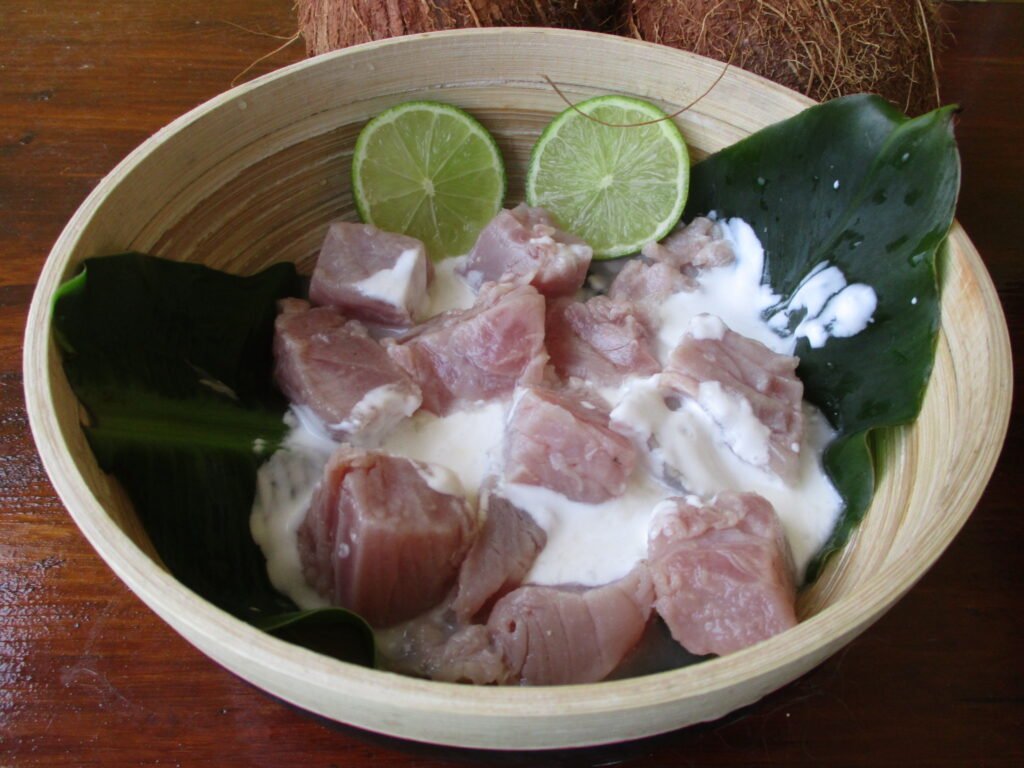
We round out the starters with a pan-Pacific masterclass in chemical cooking. Known as Oka in Samoa and Ika Mata in the Cook Islands, this dish features raw fish (often tuna or local reef fish) cured in citrus juice and bathed in hand-squeezed coconut cream.
Culinary historians love to act like ceviche and tartare are exclusively Latin American or European innovations. This dish dismantles that narrative. It is pre-colonial technology designed to preserve protein in the oppressive tropical heat without refrigeration. The acid “cooks” the fish, while the fat-rich coconut cream acts as a protective barrier.
Act II: The Science of Survival
Soups, sides, and fermentations born from necessity and botanical mastery.
Rourou (Fiji)
For our soup course, we offer Rourou, a rich, velvety broth made from taro leaves simmered in coconut milk, garlic, and ginger.
This dish is a lesson in plant biology. In their raw state, taro leaves are packed with microscopic calcium oxalate crystals. If you try to eat one raw, it will literally shred your throat and vocal cords. Rourou is the result of indigenous scientific knowledge. By utilizing precise, long-stewing techniques, Fijian cooks safely break down those toxins, turning a hazardous, heavily armored leaf into a nutrient-dense, iron-rich fortress.
Poi (Hawaii)
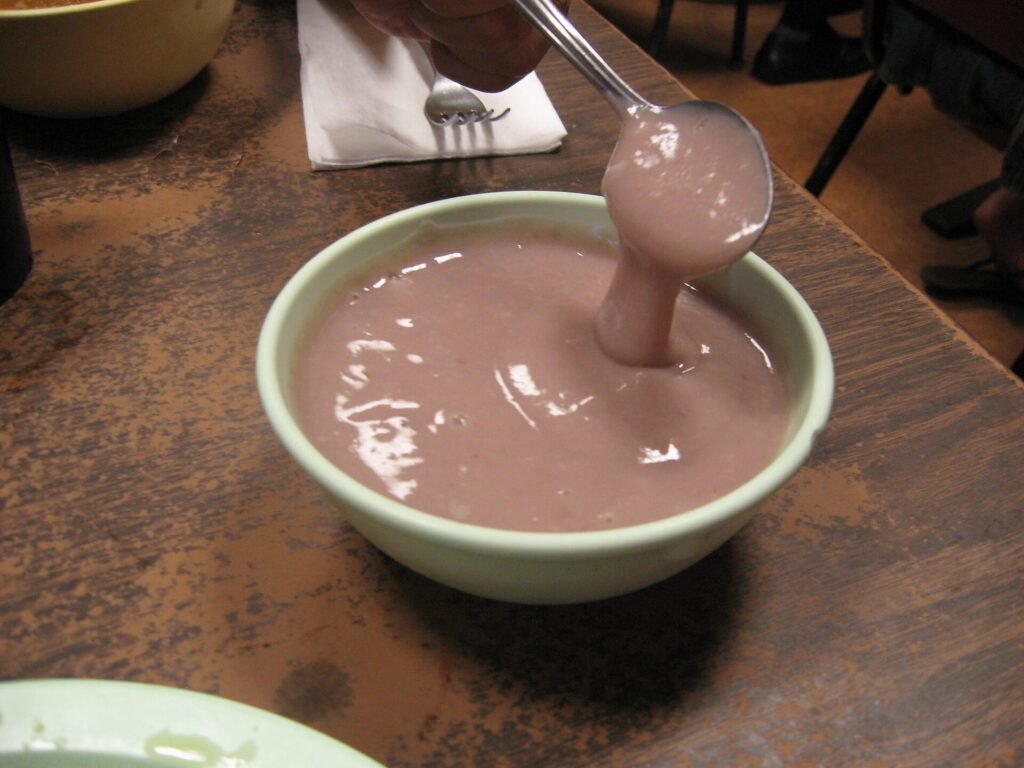
Next is a small bowl of Poi, made by pounding cooked taro root with water until it becomes a smooth, viscous liquid, and then leaving it to ferment.
When European colonizers first encountered Poi, they dismissively called it “paste” or “wallpaper glue,” completely missing the genius of the dish. Poi is a feat of microbiology. The natural fermentation process preserves the taro, creating a highly digestible, probiotic-rich carbohydrate that could sustain Polynesian voyagers for weeks on the open ocean. It wasn’t a side dish; it was the shelf-stable rocket fuel of Pacific exploration.
Masi / Ma (Marquesas / Micronesia)
We follow the Poi with a bread service featuring Masi (or Ma).
Living in the South Pacific means living with the constant threat of cyclones capable of wiping out an entire island’s food supply overnight. Indigenous communities engineered a failsafe: pit fermentation. They buried surplus breadfruit in leaf-lined underground silos, allowing it to ferment into a pungent, highly acidic dough. This dough doesn’t just last for a few weeks; it can remain edible for decades. We have baked it into a dense, sour flatbread. It is the ultimate survival technology. Doomsday preppers take note.
Act III: The Umu
The main courses, cooked in the communal earth oven.
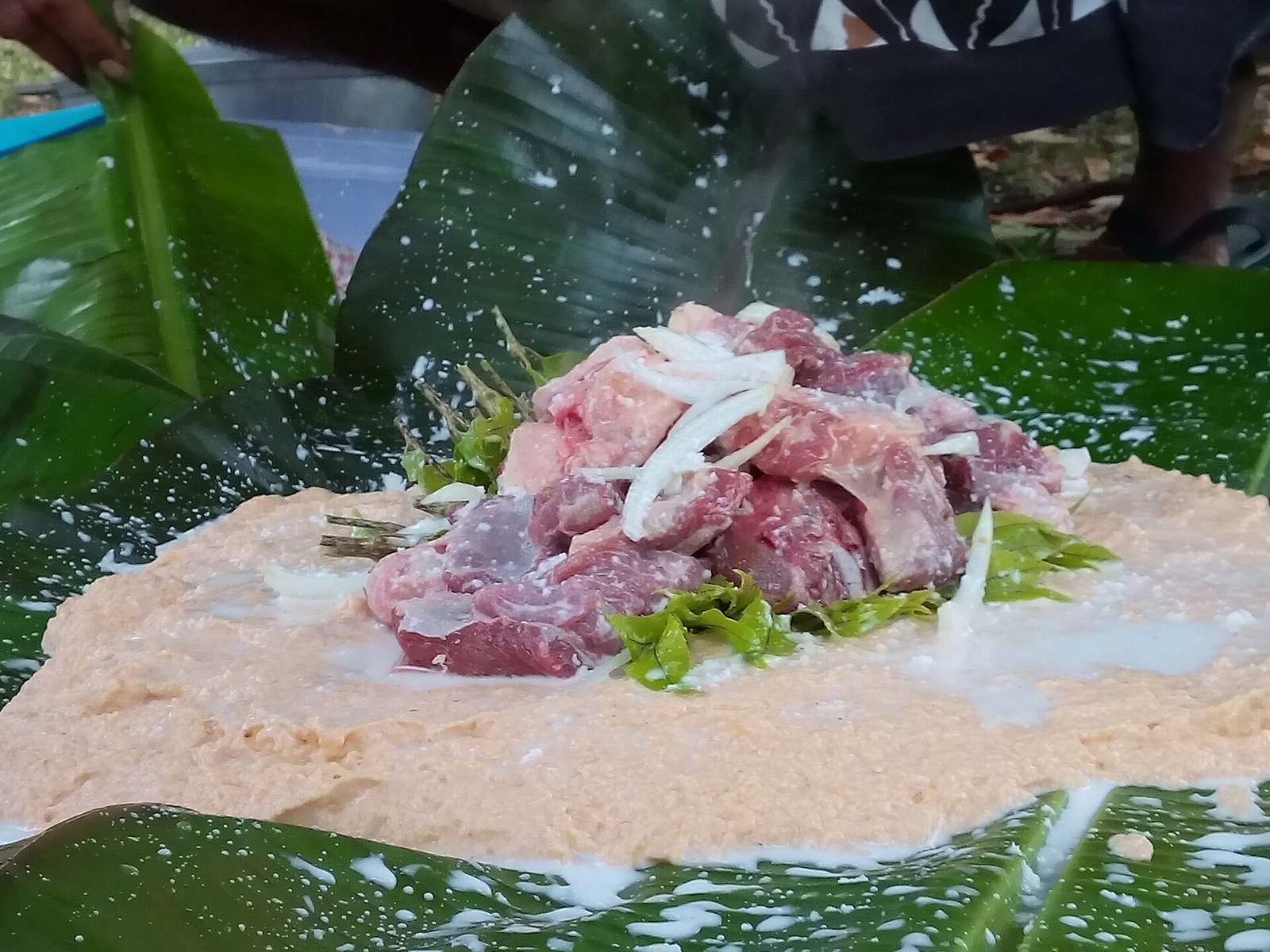
To understand the mains, you must first understand the umu (or lovo in Fiji, imu in Hawaii). European explorers frequently documented these as “primitive fires.” They were entirely wrong. The umu is a deliberately engineered, communal slow-cooker. Volcanic stones are heated to precise temperatures, the food is wrapped in layers of moisture-locking leaves, and the entire structure is buried in the earth to trap the steam. It requires an intuitive grasp of thermodynamics.
Laplap (Vanuatu)
Our first main is the national dish of Vanuatu. Laplap is created by aggressively grating root crops (yam, taro, or cassava) into a thick paste, soaking it in fresh coconut cream, wrapping it in wild leaves, and burying it in the umu.
This dish represents the heavy, starchy resilience of the islands. It emerges from the earth oven dense, savory, and imbued with the smoke of the volcanic stones. It’s a dish that refuses to be delicate because it’s built to sustain life.
Palusami (Samoa / Fiji)
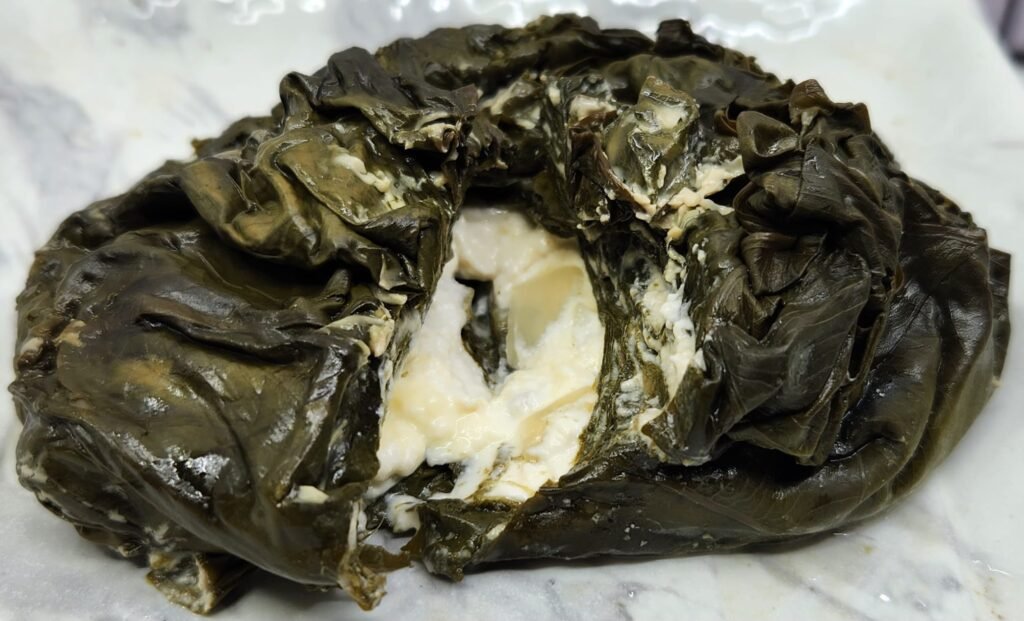
Next, a structural marvel. Palusami consists of parcels of young taro leaves cupping a center of seasoned coconut cream.
The genius here is the assembly. The liquid cream is sealed inside the leaves so perfectly that when it is baked in the umu, not a single drop leaks out. The heat transforms the liquid into a rich, savory pudding encased in tender greens. It is the Pacific’s answer to the soufflé, but achieved underground without a whisk or a ceramic ramekin.
Kumara (Polynesia-wide)
We serve a simple course of roasted Kumara (sweet potato), straight from the embers.
The presence of the sweet potato in the pre-colonial Pacific is the ultimate botanical mic-drop. For centuries, Western historians claimed it proved that Native Americans must have drifted west into the Pacific. The truth, supported by modern genetics and linguistics, is far more impressive. Polynesian navigators deliberately sailed east, hit the coast of South America, traded for the sweet potato, and sailed back against the prevailing winds. You aren’t just eating a root vegetable; you are eating the undeniable proof of the greatest maritime explorers in human history.
Saksak (Papua New Guinea)
To accompany the heavy starches, we offer Saksak, a gelatinous dumpling made from sago starch and mashed bananas.
In the swampy lowlands of Papua New Guinea, where root crops struggle to grow, communities figured out how to extract massive amounts of dense carbohydrate from the inner pith of the wild sago palm. Turning the woody interior of a swamp tree into a sweet, chewy, life-sustaining dumpling is a masterstroke of environmental adaptation.
Kaveu / Coconut Crab (Vanuatu / Niue)
Our final main represents the apex of the island ecosystem: the Kaveu, or Coconut Crab. This massive land crab possesses claws strong enough to literally crack open whole coconuts, taking on the rich, fatty flavor of its diet.
We include this to talk about the indigenous law of sasi (or rāhui). Before colonial empires brought a mentality of endless, greedy extraction to the islands, Pacific communities utilized strict, spiritually enforced bans on harvesting specific species to ensure ecosystems could regenerate. The coconut crab survives today where indigenous conservation laws are respected, and faces extinction wherever colonial and modern profit-driven harvesting takes over.
Act IV: Sweetness & Spirit
Desserts and the liquid resistance.
Fa’ausi (Samoa)
For dessert, we offer Fa’ausi, a dense, chewy block of baked taro drowned in pe’epe’e—a caramelized coconut cream sauce.
This is our chance to talk about indigenous sweetness. Before European empires flattened the islands of the Caribbean and the Pacific into brutal sugarcane monocultures for Western tea cups, South Pacific communities were already extracting complex caramels by slow-roasting coconut milk. Fa’ausi is a heavy, unapologetic dessert that entirely predates refined white sugar.
Kava (Pan-Pacific)
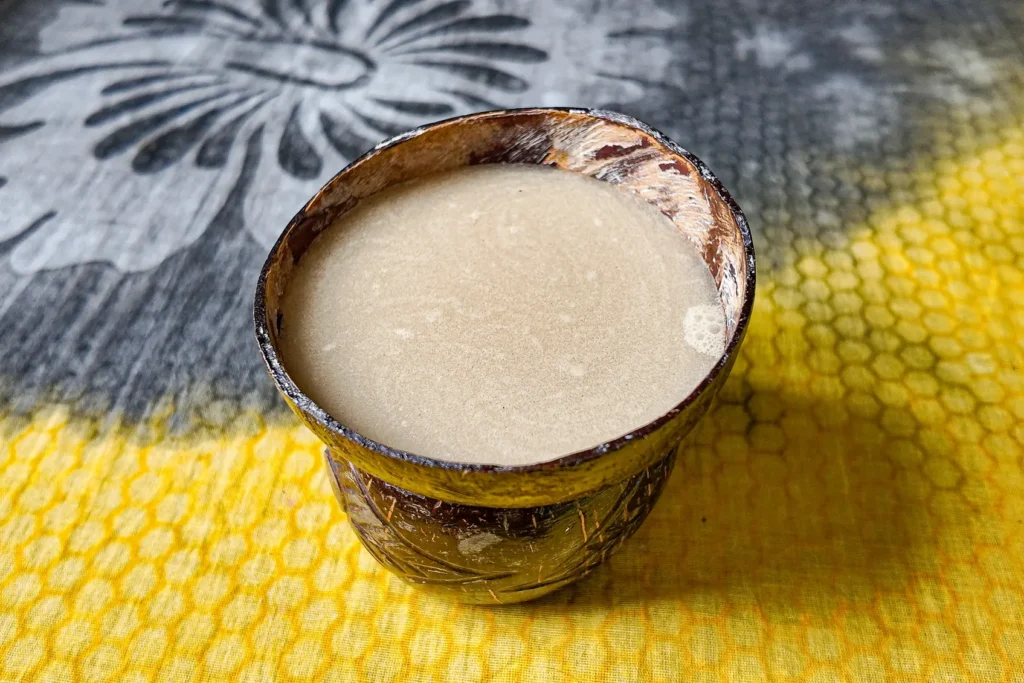
Lastly, a coconut shell filled with Kava.
A cloudy, earthy beverage made from the pounded roots of the Piper methysticum plant steeped in water, Kava is the ultimate liquid resistance. When Christian missionaries swept through the Pacific, they were terrified of this drink. They saw its mild euphoric effects, and more importantly, the unbreakable communal ceremonies surrounding it, as a direct threat to colonial order. They tried endlessly to ban it.
They failed.
Drinking Kava today is a direct communion with the soil and a celebration of a social structure that refused to be erased.
The Check
It’s time for the bill.
The next time you look at a map of the South Pacific, don’t just see a vast, empty blue ocean dotted with honeymoon resorts. See it for what it is: a brilliant, interconnected web of indigenous science, resilience, and flavor that shaped the world.