

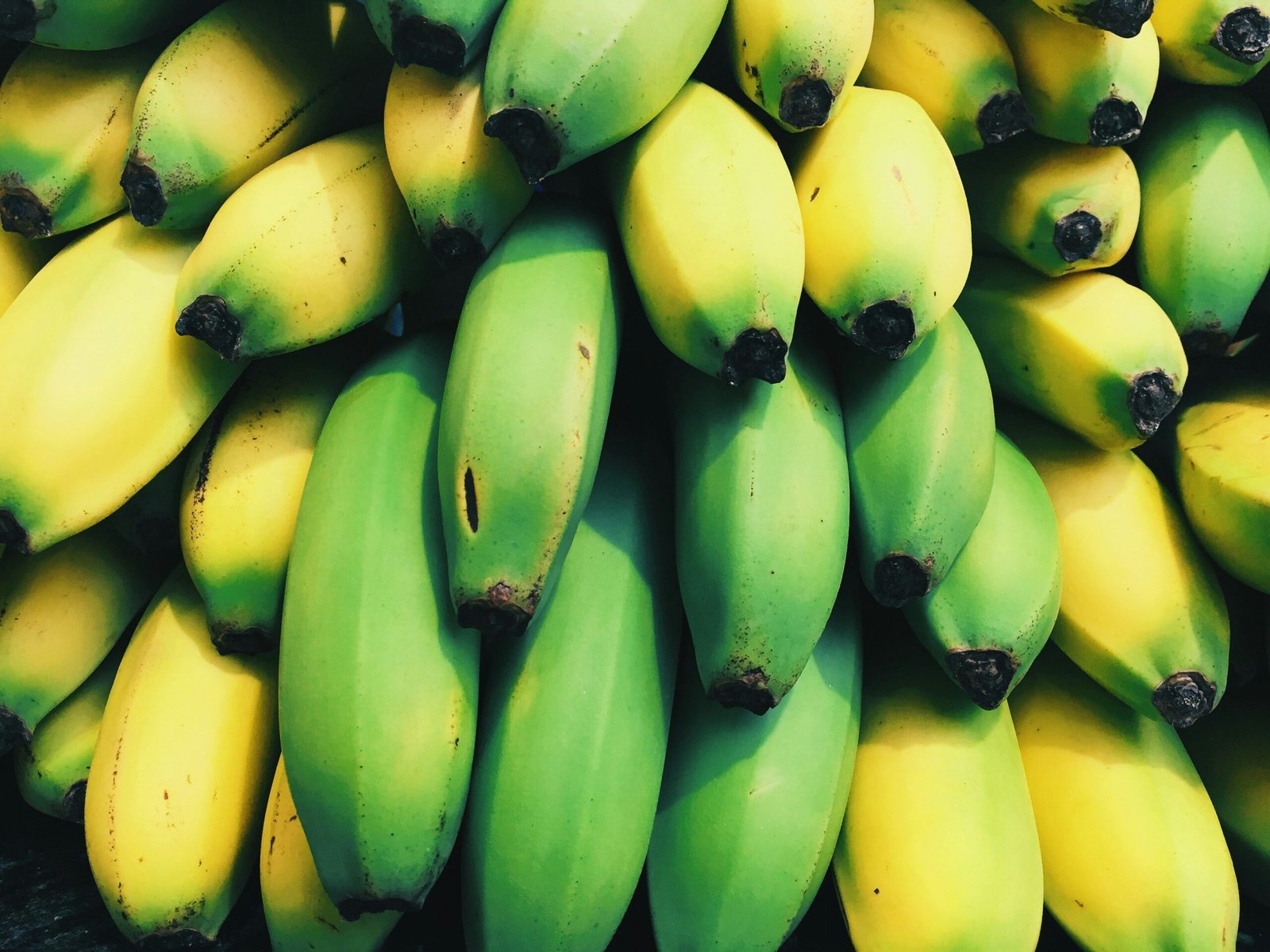
If you walk into a standard Western supermarket and navigate to the produce section, you will inevitably find a massive, uniformly yellow display of Cavendish bananas. They are flawless, identical, and aggressively engineered for lunchboxes and cereal bowls.
But if you look closely, usually shoved to the periphery of the display or relegated to a bottom shelf, you might spot a smaller, intimidating pile of what looks like overgrown, badly bruised bananas. Some are a harsh, vibrant green. Others are a mottled yellow. A few might be entirely black, looking to the untrained eye like produce that should have been thrown in the dumpster three days ago.
To the average Western shopper, this pile is a source of confusion. They might buy one, take it home, peel it raw, and take a bite, only to be hit with a chalky, astringent mouthful of dense starch. They will invariably throw it away, convinced they’ve just eaten a defective banana.
They would be wrong.
The plantain (Musa paradisiaca) is not a defective banana. It isn’t a novelty, and it certainly isn’t a sweet snack meant to be eaten raw on the train. The plantain is a culinary heavyweight. It’s part of the architectural foundation of tropical cuisine, a source of global food security, and a testament to the ingenuity of cooks across the global South who figured out how to master this stubborn fruit.
We aren’t here to talk about the dessert banana. We are going to explore how indigenous science, forced migration, and generations of R&D turned the plantain into a king of the tropical kitchen.
The Banana’s Heavyweight Cousin
First, throw out everything you know about the Cavendish banana.
The sweet banana the West consumes by the millions is a fragile, genetic clone. It is a high-sugar, low-starch fruit designed to be soft, yielding, and immediate. It requires zero effort.
The plantain, on the other hand, commands respect. It has a thicker skin, a significantly lower sugar content, and a staggering amount of dense, resilient starch. Because of this botanical reality, the plantain refuses to be eaten raw. It requires the application of heat, the friction of a mortar and pestle, or the sizzle of boiling oil to release its potential.
When you apply that heat, the plantain doesn’t turn to mush like its sweeter cousin. It holds its structural integrity, acting more like a root vegetable—a yam or a potato—than a piece of fruit.
But attributing the plantain’s global dominance merely to its biology is lazy history. The plantain didn’t conquer the tropics by accident. It was pushed.
A Technology of Survival
If you consult a colonial history book, you will likely read a neat, tidy narrative about how Spanish and Portuguese explorers “introduced” the plantain to the Americas and Africa from its ancestral home in Southeast Asia. The historical records love to frame this as a benevolent botanical gift to the colonies.
It’s a comfortable story for the colonizer, but it ignores the brutal reality of the era.
European empires didn’t spread the plantain across the globe to share the joys of tropical gastronomy. They spread it because they recognized it as a cheap, low-maintenance, high-yield source of calories. Much like the breadfruit, the plantain was deployed as industrial fuel for enslaved and indigenous populations working under the crushing weight of the plantation system. You could drop a plantain shoot into marginal soil, walk away, and return to a massive cluster of starchy fruit.
But handing someone a raw, green plantain is not cooking.
The true culinary brilliance of the plantain was forged by the people who were forced to rely on it. Enslaved West Africans and Indigenous populations across the Caribbean and the Americas took it and applied ancestral knowledge to it. They boiled it, pounded it, fried it, and fermented it. They figured out how to extract every ounce of utility from it to survive a system designed to break them.
The colonizers may have loaded the rhizomes onto their ships, but it was the communities of the global South who turned the plantain into a cuisine of resistance.
The Three Stages of Life
The most incredible thing about the plantain isn’t just its resilience; it’s its versatility. Treating the plantain as a single ingredient is a mistake. Because of the way its starches slowly convert to sugars after harvesting, the plantain is actually three entirely different ingredients disguised as one, depending on when you decide to slice it open.
Working with the plantain requires a cook who understands the rhythm of ripening.
The Green (Pure Starch) When the skin is vibrant green and impossible to peel without a knife, the plantain is at its most defensive. It is almost entirely starch. In this stage, it acts exactly like a potato, but with a firmer, more satisfying bite. It carries no sweetness whatsoever. It is a blank, savory canvas ready to absorb salt, garlic, and heavy broths.
The Yellow (The Crossover) Leave that green plantain on the counter for a week, and the skin turns yellow, speckled with black spots. The flesh yields slightly to the touch. This is the liminal stage. A significant portion of the starch has converted to sugar, but it retains enough structure to hold up to heat. The yellow plantain offers a perfectly balanced collision of sweet and savory, capable of standing up to the fiercest chilies and the heaviest spices.
The Black (The Caramel) Wait another week, and the plantain looks like it has died. The skin is completely black, soft, and wrinkled. A Western shopper would throw it in the compost. An Afro-Caribbean cook knows that this is when the magic happens. The interior has become incredibly soft, the starches entirely converted to complex sugars. When introduced to heat, it doesn’t just cook; it caramelizes, creating a sticky, deeply sweet, molasses-like profile without the addition of a single grain of refined sugar.
The Global Canvas
To truly grasp the plantain, you have to see how it operates on the ground. Across the tropics, the application of heat to this starchy fruit isn’t just cooking; it’s cultural identity.
The Physics of the Tostón (The Caribbean) If you want to understand the green plantain, you have to look at the tostón (or patacón). Found across the Caribbean and Latin America, this isn’t a simple french fry.
You slice a green plantain into thick pucks and fry them in oil until the rigid exterior softens. Then comes the critical step. You remove them from the oil and smash them flat—traditionally with a wooden tostonera, or the bottom of a heavy glass. This aggressive flattening ruptures the starchy interior, maximizing the surface area. When you drop them back into the hot oil for a second fry, they transform into rigid, golden disks of pure crunch, aggressively seasoned with salt and garlic. They are the ultimate scoop for heavy stews and fiery salsas, refusing to get soggy.
The Heavyweight Champion: Mofongo (Puerto Rico) Also utilizing the green plantain is Puerto Rico’s iconic mofongo. This dish takes the fried chunks of green plantain and throws them directly into a wooden pilón (mortar). Aggressively mashed with garlic, olive oil, and often crispy bits of plant-based protein, the plantain is forced into a dense, savory dome. It is the ultimate evolution of West African fufu methodology applied to a Caribbean reality. It absorbs the garlic and oil completely, acting as a sponge for the rich broth poured over it.
The Sweet Heat of Kelewele (Ghana) To see the yellow plantain at its absolute peak, we head to West Africa. In Ghana, kelewele is a beloved street food that relies on the plantain’s crossover stage. The yellow plantains are cubed and tossed in a fierce, gritty paste of grated ginger, raw chili, anise, and salt, before being thrown into screaming hot oil.
The genius here is the balance. If you used a green plantain, it would just be spicy and dry. If you used a black plantain, the sugars would burn before the ginger cooked. The yellow plantain is the exact right medium. The natural sugars caramelize in the oil, providing a deep, sweet relief to the aggressive, sinus-clearing heat of the ginger and chili. It is a masterclass in flavor balancing.
The Ritual of Pisang Goreng (Southeast Asia) We return to the ancestral home of the Musa family for our final stop. In Indonesia, the plantain—specifically varieties like the stout, angular pisang kepok—is the anchor of the afternoon ritual. Pisang goreng (fried banana) is ubiquitous, but it is an art form.
The batter is the key. Often utilizing rice flour and a touch of slaked lime or baking powder, the plantain is coated and fried until a shatteringly crisp shell forms around the fruit. Inside, the heat essentially steams the starchy plantain, softening it into a molten, semi-sweet custard. The contrast between the violent crunch of the exterior and the soft, fragrant interior is why this street snack has endured for centuries.
Igniting the Modern Plant-Based Kitchen
The plantain shouldn’t be relegated to a side dish you only order when you go to a Caribbean or West African restaurant. It is a highly adaptable, deeply functional ingredient that can solve a massive array of problems in a modern, plant-based kitchen.
The Ultimate Vegan Binder If you are tired of using highly processed starches or gums to hold your plant-based burgers or dumplings together, look to the green plantain. When boiled and mashed, the dense starches act as a powerful, natural binder. You can use green plantain masa to build incredible, structurally sound tamales, empanadas, or gnocchi that won’t disintegrate in boiling water.
The Savory Sweet Collision When you are building a heavy, savory curry or a fiercely spicy chili, the palate can easily become exhausted. Ditch the rice and serve it over thick, pan-fried slabs of yellow plantain. The firm, sweet starch provides a necessary landing pad for the heat, cutting through the heavy spices and offering a textural contrast that grain simply cannot provide.
The One-Ingredient Caramel Vegan desserts often rely heavily on expensive maple syrups, agave, or refined sugars to achieve depth. Next time, buy a few plantains and let them sit on your counter until they turn entirely black. Slit the skins, rub the exposed flesh with a little coconut oil and cinnamon, and bake them whole. The skin acts as a pressure cooker, and the intense heat caramelizes the natural sugars. What emerges is a sticky, complex, molasses-rich dessert that requires virtually zero effort and zero added sugar.
Respect the Starch
The next time you walk past that pile of bruised, misunderstood plantains in the supermarket, stop seeing them as a tropical novelty or a botched banana.
You are looking at a botanical survivor. You are looking at an ingredient that fueled resistance across the global South, an ingredient that demands technique, heat, and respect.
The Cavendish banana might be an easy, genetically identical snack for a fast-paced commute, but the plantain is the fruit that actually built the tropics. Take one home, get your pan hot, and start cooking